


Short answer
Natural stone projects – marble, granite, onyx or travertine – almost always go over budget because the initial estimate only covers the price of the slab per square metre. The real cost also includes cutting waste, fabrication, delivery and handling, substrate preparation, installation, treatments and spare material. A complete quote, based on drawings and site measurements, removes most of the surprises.
Two useful terms
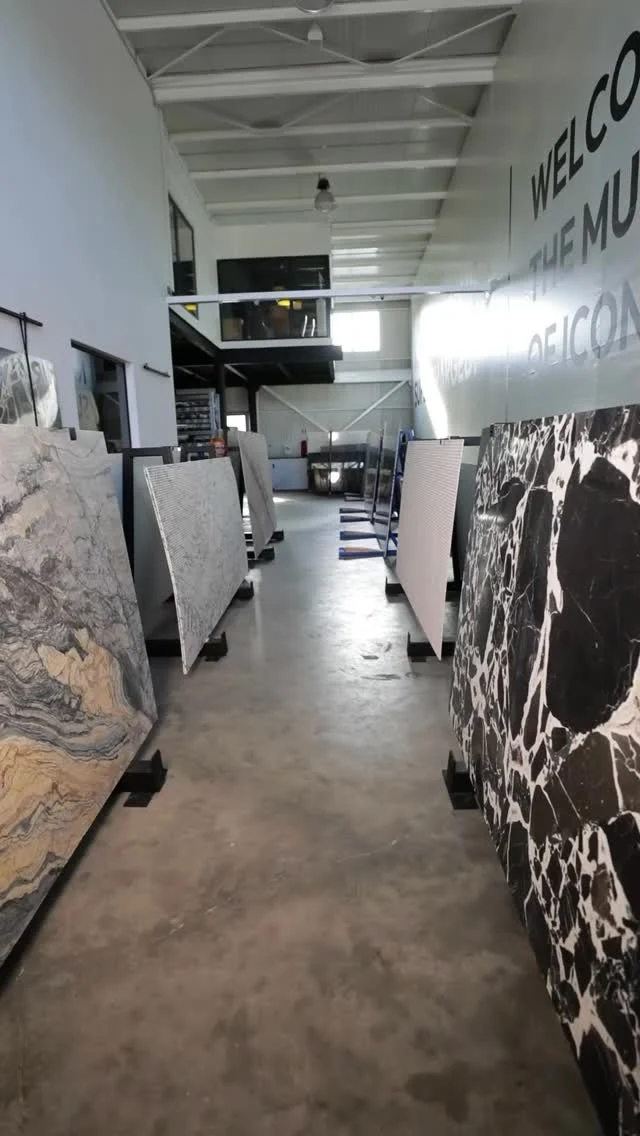
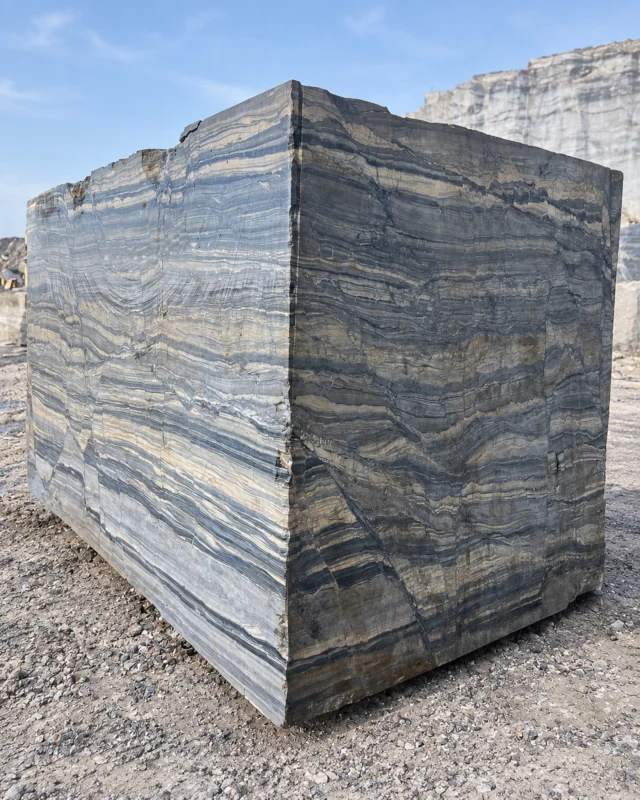
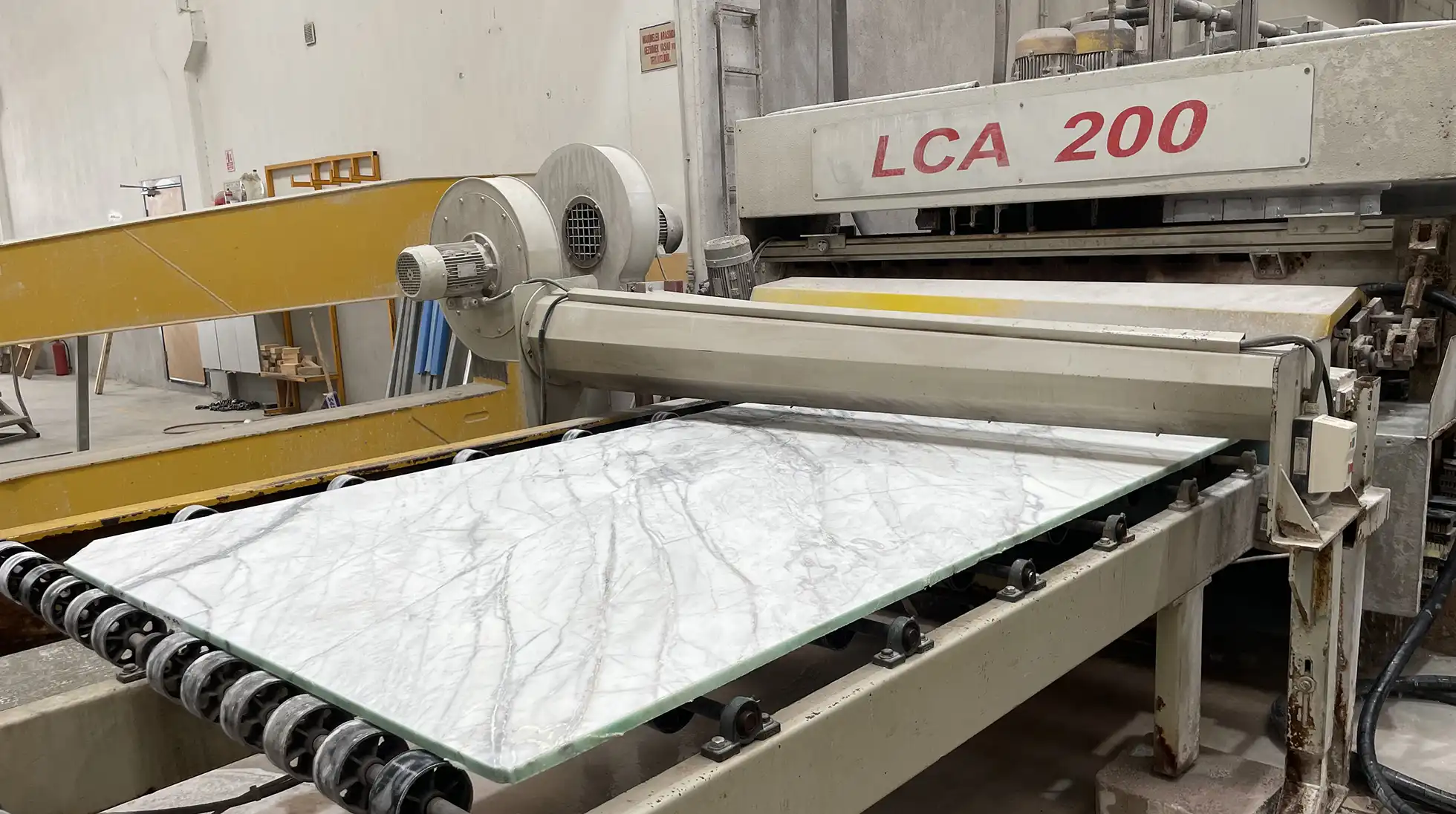
A slab is the large sheet of stone cut directly from the quarry block, from which all the pieces of a project are cut to size. A batch is the set of slabs cut from the same block, with the same colour and veining.
The 7 causes of budget overruns – and how to avoid them
- Cutting waste. Slabs are cut to the shape of the design. Offcuts, vein matching and irregular shapes can mean ordering more material than the net area. How to avoid it: agree the wastage percentage with your supplier based on the drawings.
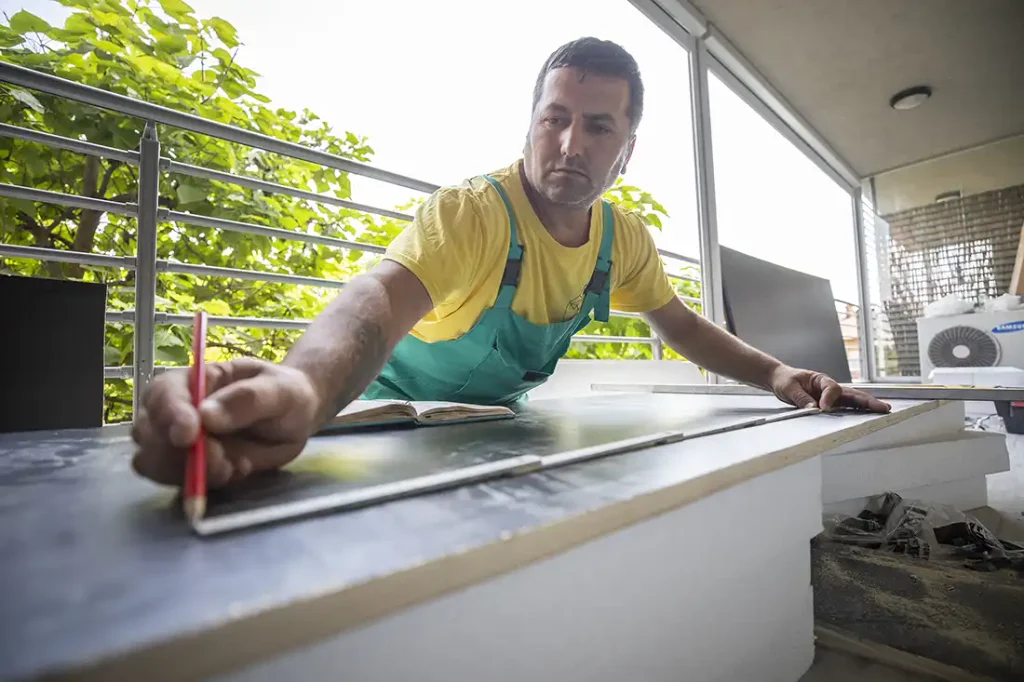
- Fabrication left out of the quote. Edge profiles, sink and hob cut-outs, drip grooves, steps and special finishes are charged separately. How to avoid it: ask for every fabrication item as a separate line, with quantities.
- A change of stone or batch. If a batch sells out, you end up with a different stone – often a more expensive one – or a delay. How to avoid it: reserve all the material from the same batch at the outset.
- Delivery and handling. Heavy slabs need dedicated transport, mechanical unloading and sometimes lifting to upper floors. How to avoid it: make sure unloading and lifting are included in the quote.
- An unprepared substrate. An uneven screed, missing waterproofing or walls that are out of true must be put right before installation. How to avoid it: check the screed and waterproofing before the final site survey.
- Changes once work has started. Design changes after the stone has been cut mean new material. How to avoid it: finalise the design before cutting.
- Treatments and spare material. Sealing, coloured grout and spare stock from the same batch for future repairs are often forgotten. How to avoid it: include them in the quote from the start.

CHow much material is lost in cutting
| Type of project | Typical cutting waste |
|---|---|
| Floor with standard tiles, rectangular rooms | 5–10% |
| Diagonal floor or irregular shapes | 15–20% |
| Kitchen or bathroom worktop from a slab, with cut-outs | 15–20% (25–35% for strongly veined stone) |
| Bookmatch cladding (book-matched slabs, mirrored veining) | 30–40% |
| Spare stock for future repairs, same batch | 1–2% of the area |
The floor values start from the TCNA (Tile Council of North America) recommendations: 10% for a straight lay and 15–20% for a diagonal lay. In PIATRAONLINE’s experience, actual waste on simple floors is 5–10%. The other values reflect current practice in stone fabrication. The exact percentage is set on the project drawings.a montajul drept și 15–20% la montajul în diagonală. Din experiența PIATRAONLINE, la pardoselile simple pierderea reală este de 5–10%. Celelalte valori sunt practica curentă în prelucrarea pietrei. Procentul exact se stabilește pe planurile proiectului.
What a complete quote should include
Ask for every quote in the same format, so you can compare them fairly:
- The variety, origin, batch, thickness and finish of each stone
- The net area and the area ordered (including waste)
- Every fabrication item, with quantity and price
- Delivery, unloading and lifting to upper floors
- Substrate preparation: what is included and what is not
- Installation, adhesives and grouting materials
- Sealing and other treatments
- Spare material and the delivery lead time
- A final site survey before the stone is cut

Frequently asked questions
Why do natural stone projects go over budget?
Because the initial budget usually covers only the price of the slab per square metre. Cutting waste, fabrication, delivery, substrate preparation, installation and treatments are added later and change the final cost. A complete quote based on drawings includes them from the start.
Why do natural stone quotes vary so much for the same stone?
Some quotes cover only the slab, while others also include fabrication, delivery and installation. Always compare quotes line by line.
How much extra natural stone should I order for wastage?
It depends on the shape of the design and on vein matching: from 5–10% for a simple floor up to 30–40% for bookmatch cladding. Agree the percentage with your supplier based on the drawings, not on a rough estimate.
ow do I avoid running out of matching stone halfway through a project?
Reserve all the material from the same batch at the outset, plus 1–2% spare stock for future repairs.
What should a stone specification include to keep the project on budget?
The variety, finish and thickness of the stone, a requirement for all material to come from the same batch, the cutting waste percentage, the list of fabrication items, the condition of the substrate and a final site survey before cutting.
About PIATRAONLINE
PIATRAONLINE offers technical advice and cut-to-size fabrication for marble, granite, onyx and travertine. Our own teams carry out complete installations in Romania. Our showrooms are in Romania: Bucharest (Aleea Teișani 137A, Sector 1) and Timișoara (Calea Torontalului 69, VOX Technology Park). Samples are free – you pay only for delivery, and for architects, designers and developers delivery is free too – within a limit on the number of samples set out in the Info Center on our website.
Request a complete quote: via our website, by email or on WhatsApp – [email protected], +40744 880 077.