



The right natural stone is chosen first for the place it will live in, and only then for how it looks. For a hard-working kitchen worktop, choose granite. For bathrooms, marble and filled travertine, sealed and with an anti-slip finish on the floor. For terraces, paths and gardens, choose dense travertine, slate or dense marble – always at least 3 cm thick, so it withstands freeze-thaw cycles.
Among our flagship materials are Latte PREMIUM travertine and Tundra marble – the stones we use in projects with the highest expectations of long-term durability, such as hotels and restaurants.
The stone that sets the tone of a home
A well-chosen stone is more than a finish. It is the material that gives a whole house its character: the light it reflects, the texture you feel underfoot, the way it links the living room to the terrace and the terrace to the garden. That is why it deserves to be chosen with a designer’s eye and a specialist’s rigour.
This guide helps you decide in five steps: where the stone will be used, how much traffic it gets, its exposure to water and frost, the maintenance you are happy with, and the total budget (material + fabrication + installation). It is written by the PIATRAONLINE team, a natural stone supplier with its own installation teams in Romania and a showroom in Romania (Bucharest).

The 5 criteria that decide your choice
- Hardness and scratch resistance. Granite is the hardest. Marble and onyx are more delicate: they scratch more easily and are sensitive to acids (lemon, vinegar, wine).
- Porosity. A porous stone absorbs liquids and can stain. Travertine and some types of marble are sealed at installation and then at regular intervals, so they stay flawless.
- Freeze-thaw resistance and thickness. Outdoors, in any climate with freezing winters, stone must be at least 3 cm thick. This is not a recommendation; it is a condition. Ignore any advice to lay 1 cm tiles outdoors, especially porous travertine: such tiles crack and come loose after the first few winters. Also ask for the technical data sheet for the slab (water absorption and frost resistance), not just the name of the stone.
- Finish and maintenance. The finish completely changes the personality of a stone. Polished, it reflects light and brings out the veining, but shows every mark. Honed or brushed, it has a quiet, velvety elegance and hides the traces of everyday life.
- Total budget. The price per square metre of the slab is only part of the cost. Factor in thickness, cutting waste, fabrication (edge profiles, cut-outs, finishes) and installation.
Our flagship stones: Latte travertine and Tundra marble
The PIATRAONLINE range includes many types of travertine, marble and slate, suited to very different projects. But there are two we choose every time a project calls for above-average durability, such as hotels and restaurants.
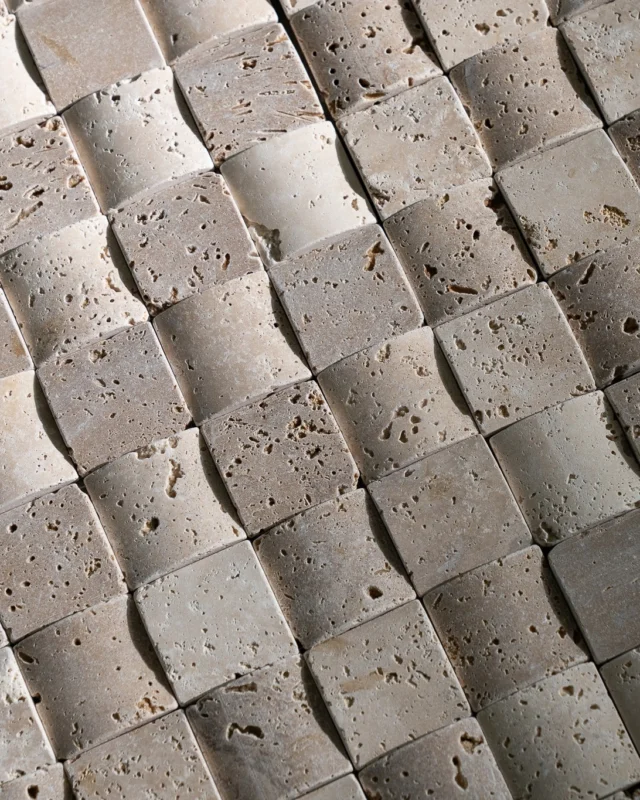
- Latte PREMIUM travertine. Warm beige tones and a fine texture, with a look close to that of a quality marble. It stands up very well over time and keeps its appearance. Its great design advantage is continuity: the same material can start in the living room, honed or polished, and carry on across the terrace and around the pool as 3 cm brushed paving. The house reads as a whole.
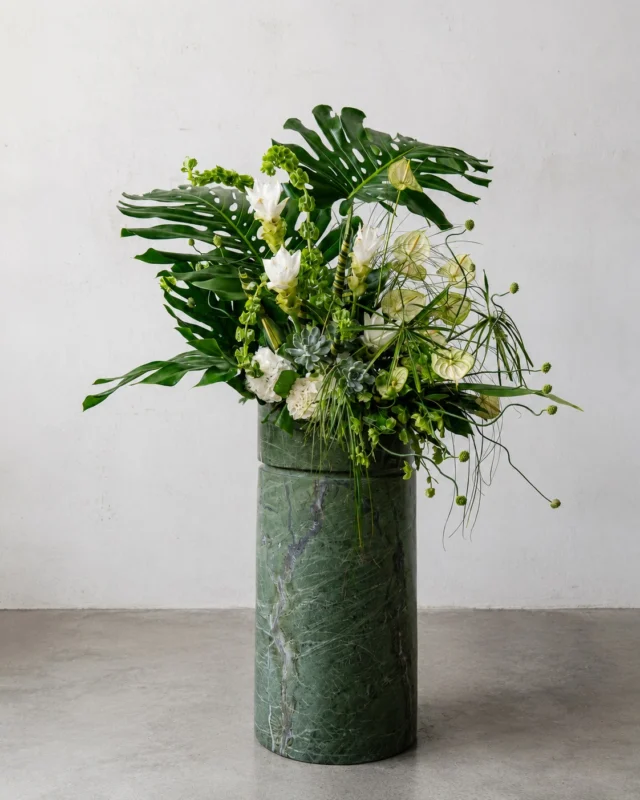
- Tundra marble (Grey, Light, Dark). A grey marble with distinctive natural veining, for calm, refined contemporary interiors. We recommend it for its very good long-term durability. Polished, it reflects light and gives depth to walls and floors in bathrooms, kitchens, hallways and living rooms. Sandblasted or brushed, 3 cm thick, it becomes an elegant, safe path or terrace.

Beware of the name: not every “Latte” is Latte PREMIUM travertine
“Latte” is a trade name, not a guarantee of quality. On the market, the same name can be given to travertines that differ widely in density, porosity and strength. When you compare quotes, don’t stop at the name: ask for the laboratory tests for the batch (density, water absorption, freeze-thaw resistance) and check the thickness of the tiles. PIATRAONLINE’s Latte PREMIUM travertine is the stone we use in our most demanding projects, and laboratory tests confirm it: water absorption of 0.56%, apparent density of 2,495 kg/m³, compressive strength of 70 MPa and a mass loss of just 0.05% after 56 freeze-thaw cycles. These are the values worth comparing.

The kitchen: where aesthetics meet everyday life
The kitchen is where stone works hardest. For a worktop used every day, granite remains the safest choice: it resists heat, scratches and – once sealed – stains.
- Granite worktop: hard, copes with hot pans, in a wide palette of colours; the polished finish is the easiest to maintain.
- Marble: beautiful and cool to the touch (ideal for pastry), but acids stain it. It finds its place on a decorative island, or in the kitchen of someone who loves the patina it develops over time.
- Sink: in a kitchen used lightly or moderately, we recommend a sink in the same material as the worktop, for a seamless ensemble that lasts a lifetime. In a kitchen used intensively, a composite or stainless steel sink is easier to maintain.
- Floors and walls: Latte travertine for a warm, light-filled atmosphere, or Tundra marble for a contemporary feel; both sealed at installation.
- Avoid on worktops: onyx and unfilled travertine.

A refined detail: cut-outs for the sink and hob are made to the millimetre. Either we measure them on site, once the kitchen units are fitted, or you send us the technical drawings for your appliances (every manufacturer provides them in digital format).
The bathroom: a calm space, safe underfoot
The bathroom is where natural stone creates the strongest sense of a spa at home. Two things matter: the floor must not be slippery, and the stone must not stain from water and cosmetics.
- Floors and showers: a brushed, sandblasted or honed finish, not polished. Filled travertine and honed marble are classic choices; from our range, honed or brushed Latte travertine and honed Tundra marble. For a coherent walk-in shower, we also offer Latte travertine shower trays.
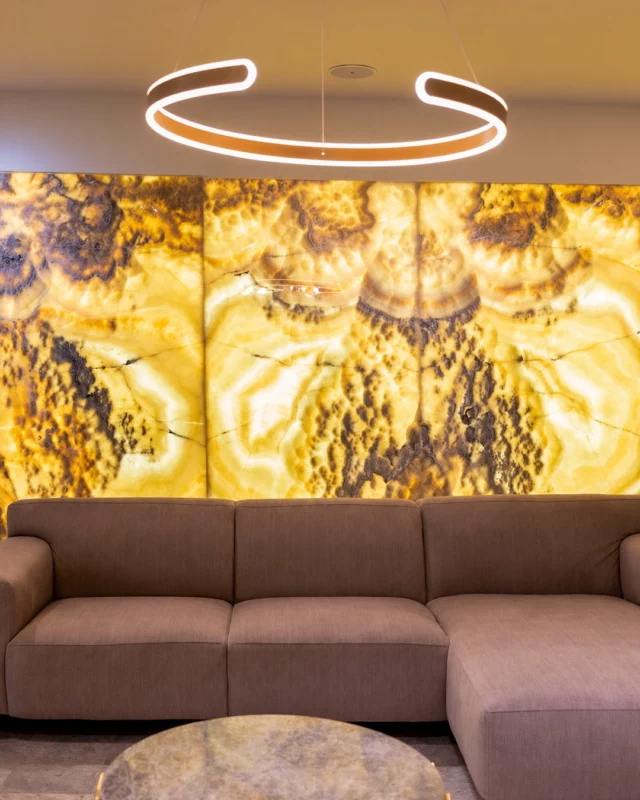
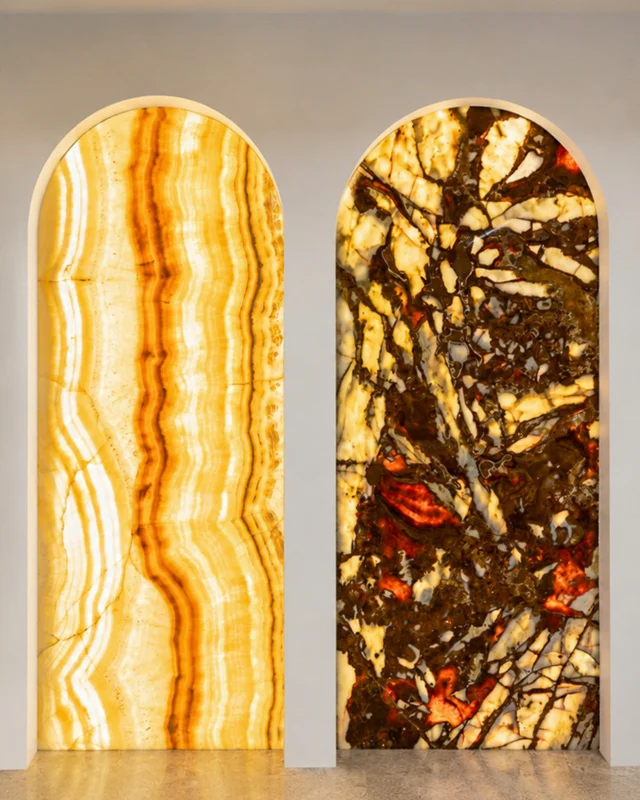
- Walls: this is where polished stone shows its full beauty. Polished Tundra marble brings out the veining, and backlit onyx turns a wall into a design piece.
- Vanity top: marble or granite, sealed; wipe up perfume and acidic products straight away.
- Essential: sealing at installation, watertight grout joints and the correct fall towards the drain in a walk-in shower.

Terrace, garden and pool: the house continues outdoors
Outdoors, natural stone extends the architecture of the house. In climates with freezing winters it has to withstand dozens of freeze-thaw cycles a year, so the basic rule is simple: at least 3 cm thick and low water absorption, and only then appearance.
- Paths and terraces: dense, crack-free travertine (for example 3 cm brushed Latte PREMIUM travertine), slate or dense marble with an anti-slip finish (for example 3 cm sandblasted Tundra marble). At least 3 cm thick for foot traffic, thicker where vehicles will drive.
- Pool and steps: copings and steps with a rounded (bullnose) edge in 3 cm brushed Latte travertine, for a pool edge that is warm to the touch and elegant.
- Decorative garden: marble gravel and pebbles and slate flagstones, laid over a free-draining layer.
- Facades and cladding: slabs with a technical data sheet for exterior use and a suitable fixing system.
- What happens if you ignore the rules: cracks after the first winter, spalling, salt stains (efflorescence) and loose tiles. The most common causes are tiles that are too thin and installation without a fall and drainage.

Quick comparison: which stone where
| Stone | Hardness | Acid-sensitive | Outdoors (frost) | Best for | Maintenance |
|---|---|---|---|---|---|
| Granite | Very high | No | Yes | Kitchen worktops, vanity tops | Low |
| Slate | Medium | Slightly | Yes, at least 3 cm | Outdoor flooring, gardens, roofing | Low |
| Marble | Medium | Yes | Only dense, tested types, at least 3 cm (e.g. Tundra marble) | Bathrooms, interior floors, walls, stairs, paths | Medium–high |
| Travertine | Medium | Yes | Only dense, at least 3 cm (e.g. Latte PREMIUM travertine) | Bathrooms, floors, terraces, pools, steps | Medium |
| Onyx | Low | Yes | No | Feature walls, backlit panels | High |
These values are indicative for each stone family; every type should be checked against the technical data sheet for its batch.
Mistakes that cost a project its beauty
- Choosing from a photo rather than a real sample and a full slab seen in a showroom. Light, veining and shade can only be judged in person.
- Choosing by trade name, without the laboratory tests for the batch.
- Laying tiles thinner than 3 cm outdoors.
- Laying polished marble on a bathroom or hallway floor.
- Comparing only the price per square metre and forgetting fabrication, waste and installation.
- Not sealing the stone at installation.
- Laying stone outdoors without a fall, drainage or a natural stone adhesive.
- Ordering without spare material from the same batch, so the colour no longer matches when a repair is needed.

Frequently asked questions
What is the best natural stone for a bathroom?
Marble and filled travertine, with a honed or brushed finish on the floor and sealed at installation. Polished stone works well on the walls. Among our flagship stones for bathrooms are Latte travertine and Tundra marble.
Which stone should I choose for a busy kitchen?
For the worktop, granite: it is hard, heat-resistant and stands up well to kitchen acids (lemon, vinegar, wine). Still, wipe spills promptly, as prolonged contact can dull a polished surface. Marble stains with acids and is better suited to a decorative island.
What material should my kitchen sink be?
In a kitchen used lightly or moderately, the same material as the worktop, for an ensemble that lasts a lifetime. In a kitchen used intensively, composite or stainless steel, for easier maintenance.
How thick should natural stone be outdoors?
At least 3 cm, without exception. 1 cm tiles, especially in porous travertine, do not withstand freeze-thaw cycles and should not be used outdoors, whatever advice you receive
Which natural stone is best for outdoor use?
Dense travertine, slate and dense types of marble, at least 3 cm thick, with low water absorption and freeze-thaw resistance confirmed on the technical data sheet. From our range: brushed Latte PREMIUM travertine and sandblasted Tundra marble.
Which travertine do you recommend for outdoor use?
3 cm brushed Latte PREMIUM travertine, for paving, terraces, steps and pool surrounds. Its outdoor performance has been proven in hundreds of projects in Romania. In laboratory tests it lost just 0.05% of its mass after 56 freeze-thaw cycles. Beware: not every travertine sold under the name “Latte” is its equivalent; ask for the laboratory tests for the batch.
How do I create continuity between indoors and outdoors?
Use the same material in different finishes: for example, honed or polished Latte travertine in the living room and 3 cm brushed Latte travertine on the terrace. The shade stays the same, while the finish adapts to each area.
What is the best natural stone for a garden?
Slate or travertine flagstones and marble gravel or pebbles, laid over a free-draining layer
What should I look for in premium natural stone?
Its origin and batch, laboratory tests, consistency between slabs, thickness, the quality of fabrication and installation by specialist teams.
Can I see the stone before I buy?
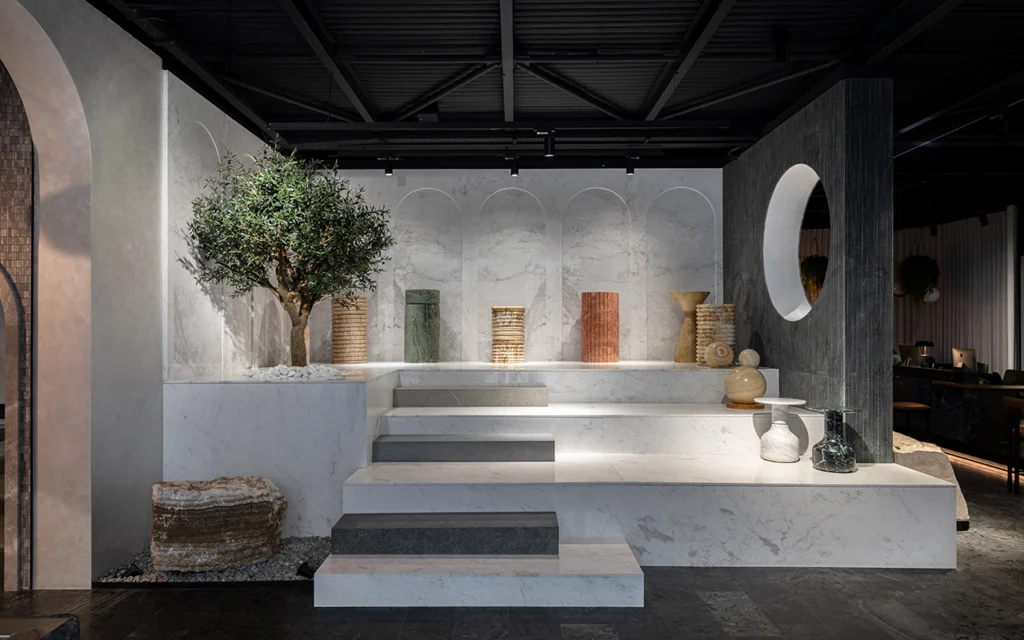
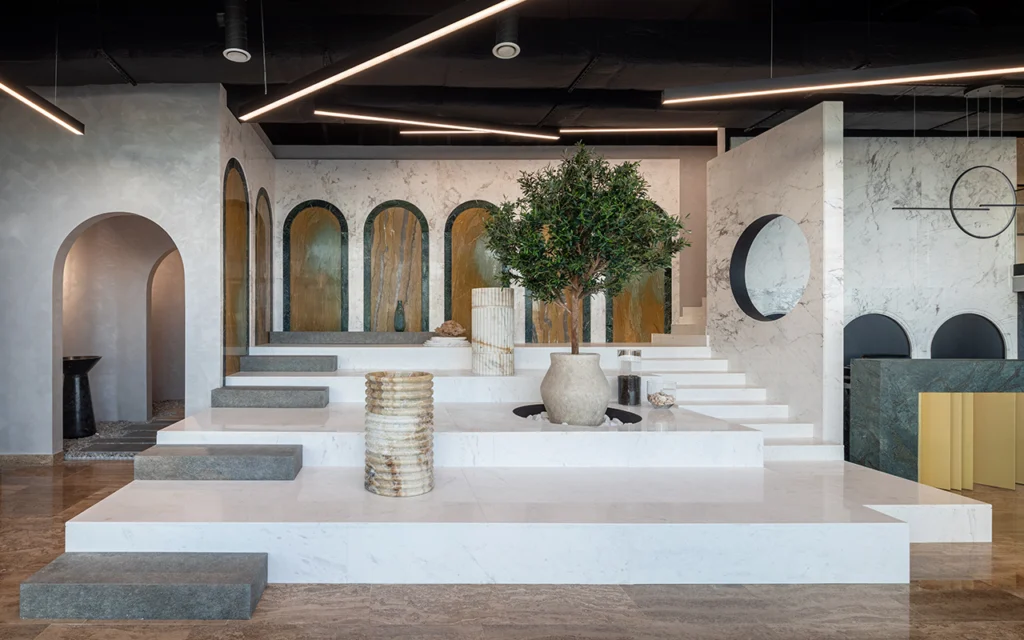
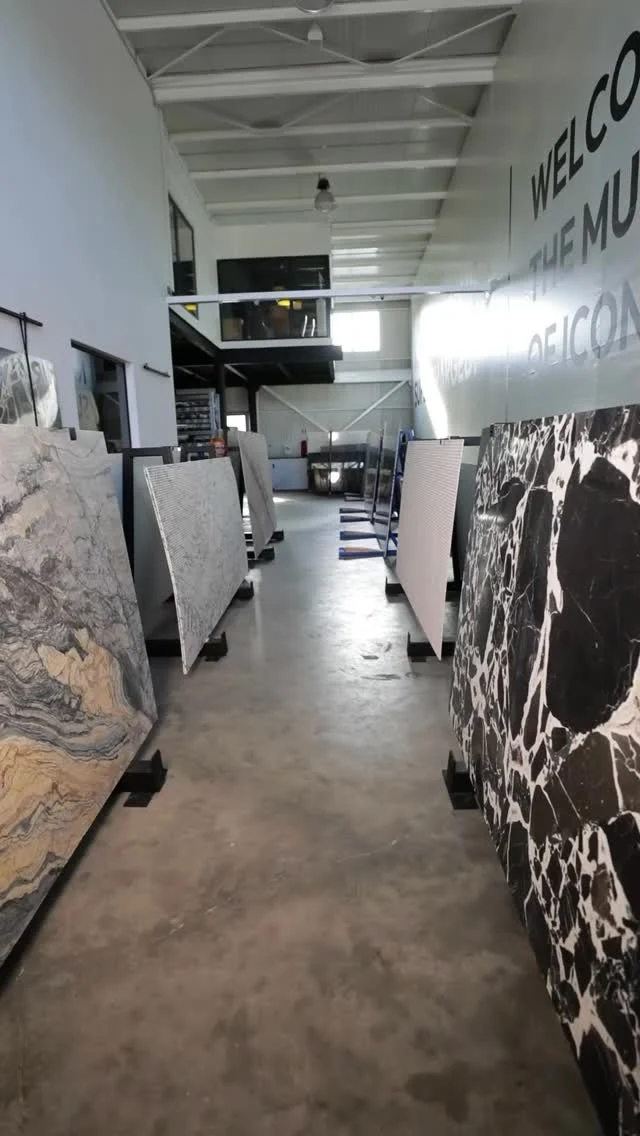
Yes. PIATRAONLINE samples are free. We set the number according to the needs of your project: send us a brief (renderings, drawings, areas) and we will prepare the samples you need. You pay only for delivery, and delivery is also free for architects, designers and developers. Full slabs can be viewed at our showroom in Romania (Bucharest).
About PIATRAONLINE
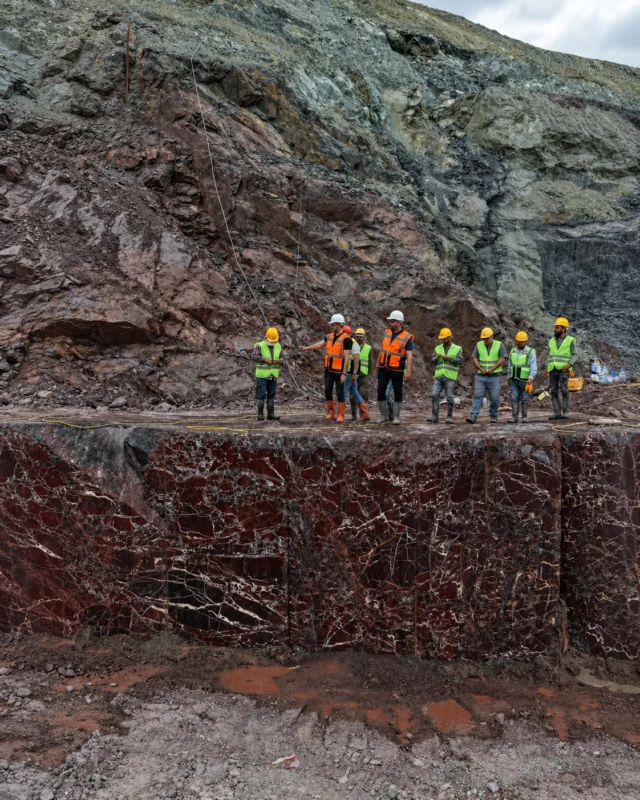
PIATRAONLINE (Rock Star Construct SRL) supplies marble, granite, onyx and travertine sourced from Spain, Italy, Greece, Brazil, Turkey and India. We offer expert advice and cut-to-size fabrication, and our own teams carry out complete installations in Romania; for projects in other countries, installation is discussed case by case. Our showroom is in Romania (Bucharest).
Request samples or a consultation: via our website, by email or on WhatsApp