


La Mița Biciclista, a cultural landmark reactivated in Bucharest

Rereading a house between memory, hospitality and scenography
Built in 1908, Casa Mița Biciclista returns to the city’s circuit through an intervention that recovers its Belle Époque elegance without turning it into a nostalgic set. CUMULUS builds a precise relationship between heritage, light, colour and the new rituals of contemporary hospitality.
From the brasserie opening onto the street to the hidden bar upstairs, each space explores a different facet of Maria Mihăescu. Velvet, perforated brass, mirrors and natural stone compose a succession of intimate frames in which the history of the house becomes atmosphere rather than mere reference.
The fit-out was carried out in stages between 2023 and 2024, and the project received First Prize for Best Design at the Romanian Hospitality Awards 2025.


La Mița Biciclista reopens its doors as a cultural establishment, preserving the memory of the house and translating it through light, materiality, scenography and a direct relationship with the city. Built in 1908, the house combines the Beaux-Arts language with Art Nouveau influences, and the contemporary intervention reactivates its social and cultural character.

- Cocktail bar: 16 sq m
- Brasserie: 233 sq m
- Period: 2023–2024
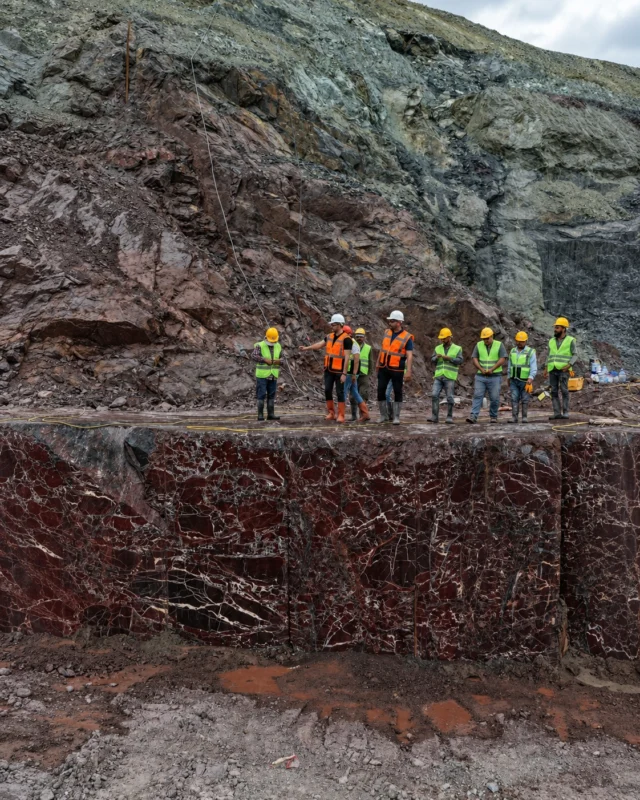
- Natural materials: 7 countries

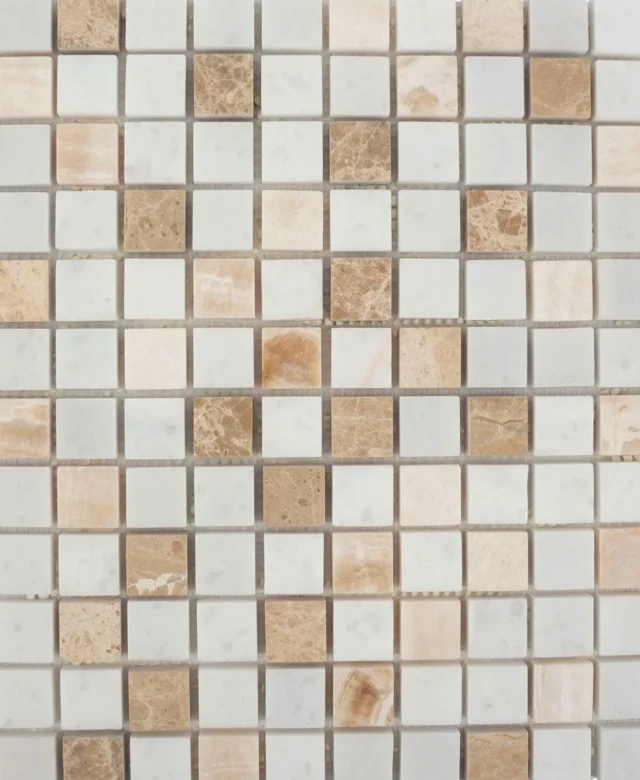
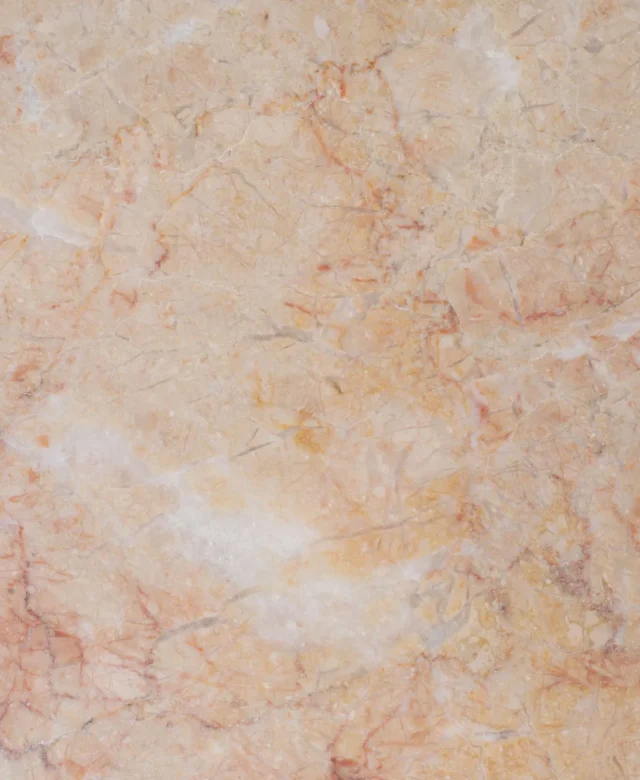
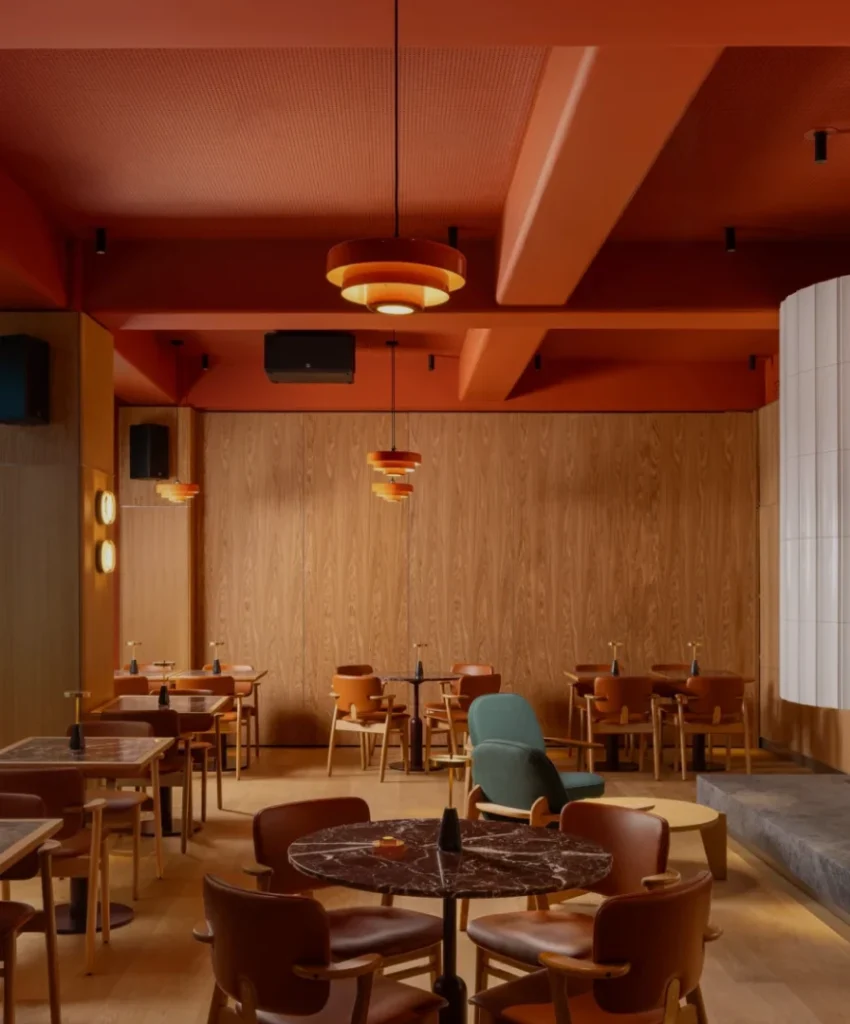
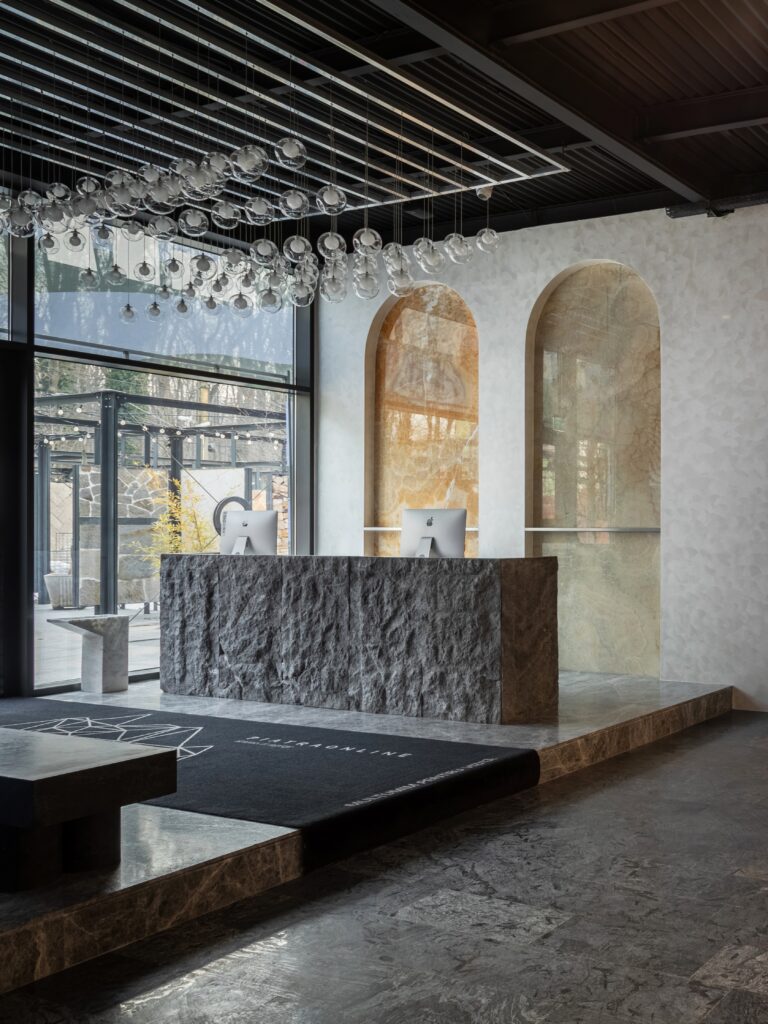
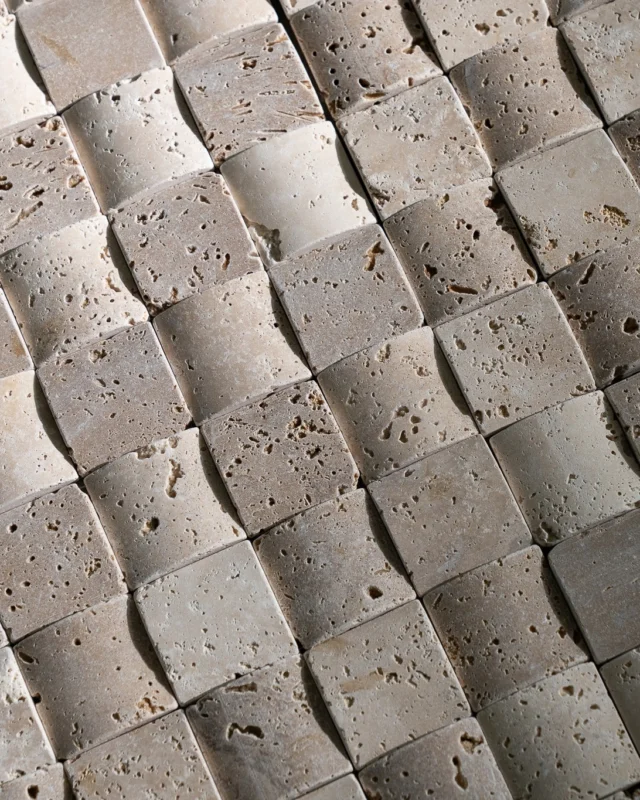
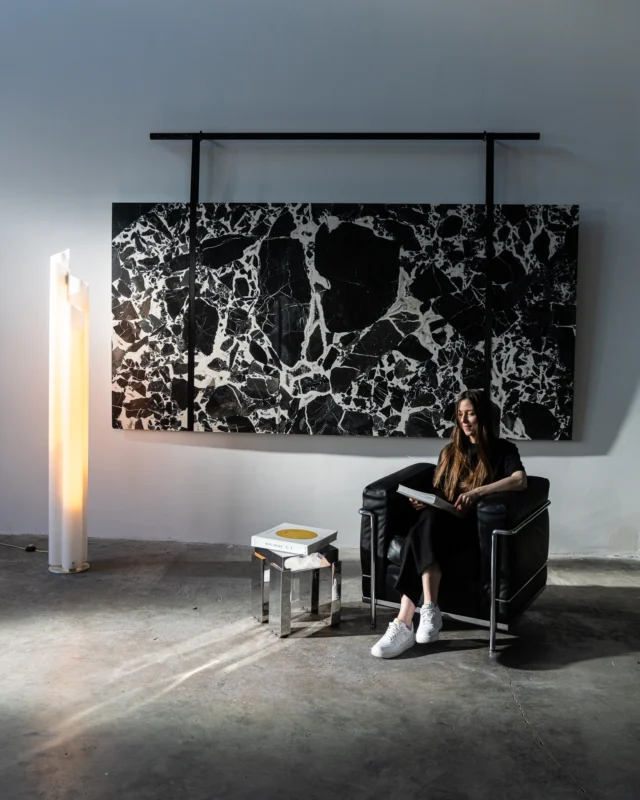
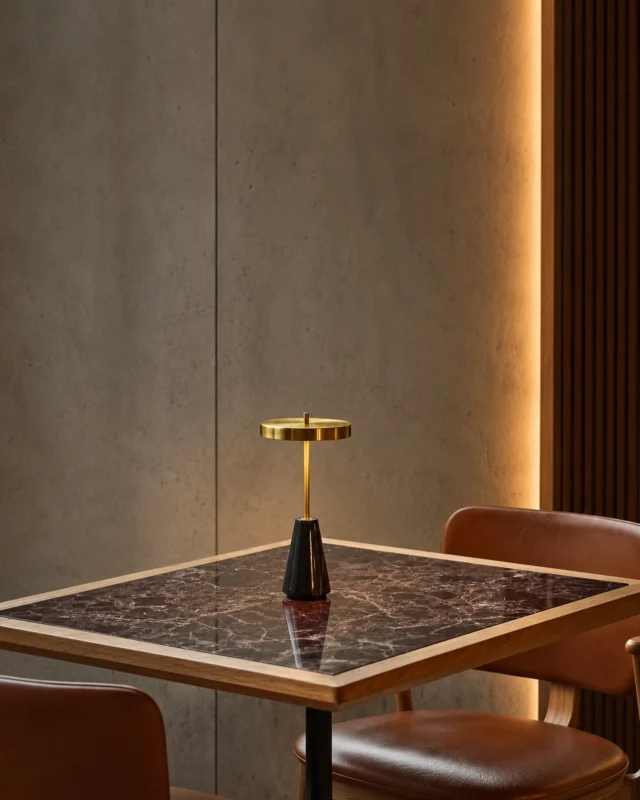
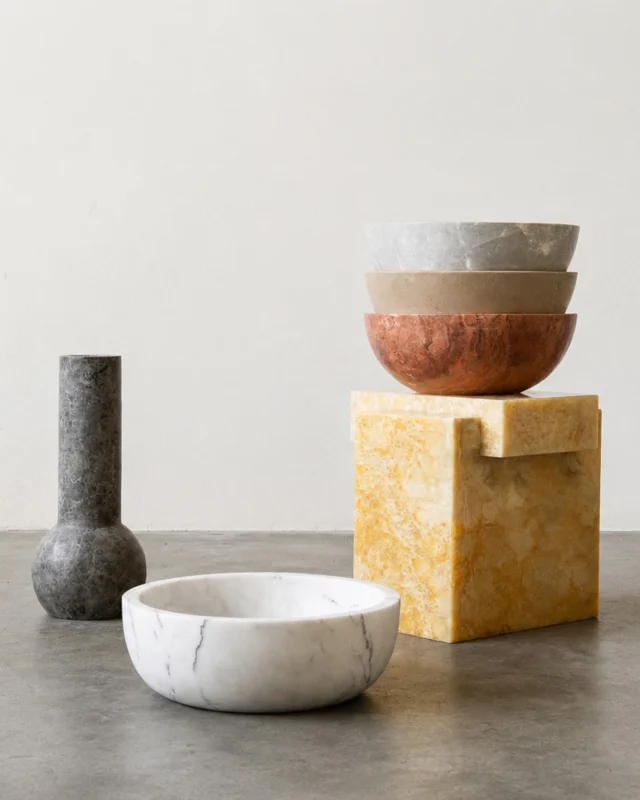
Inside, natural stone lends weight to the scenography, while the Palisandro and Light Beige marble tables turn every functional gesture into an object with sculptural presence.

Architecture as a scenography of memory
The project works as a succession of registers in which heritage, hospitality and culture become inseparable. The ground-floor brasserie opens towards the city like a reception salon, while the upstairs bar retreats into the atmosphere of a boudoir, together building a gradual experience from public space to intimacy.
The intervention meant precision within a historic context: restoring details, integrating building services, special works and careful coordination of materials. The result is an interior in which the past is not literally reconstructed, but activated through light, tactility and contemporary use.


Recommended materials