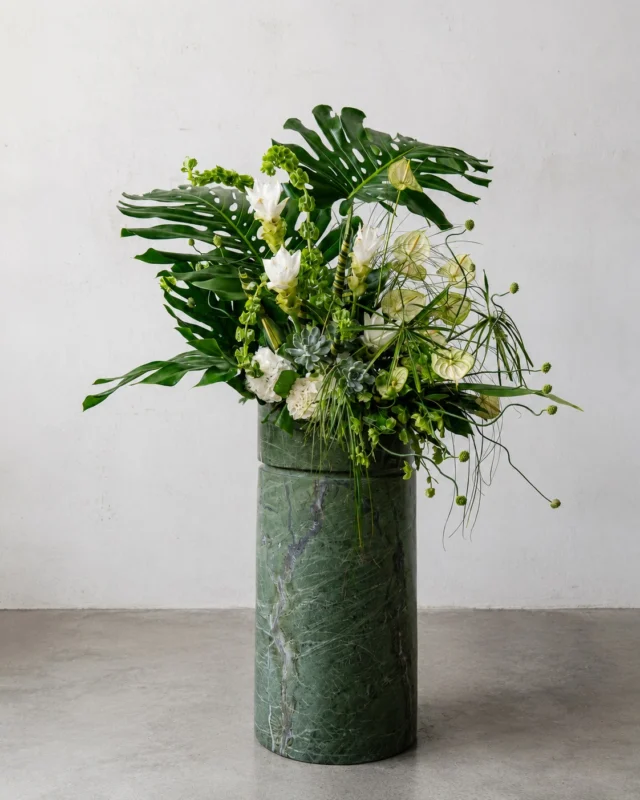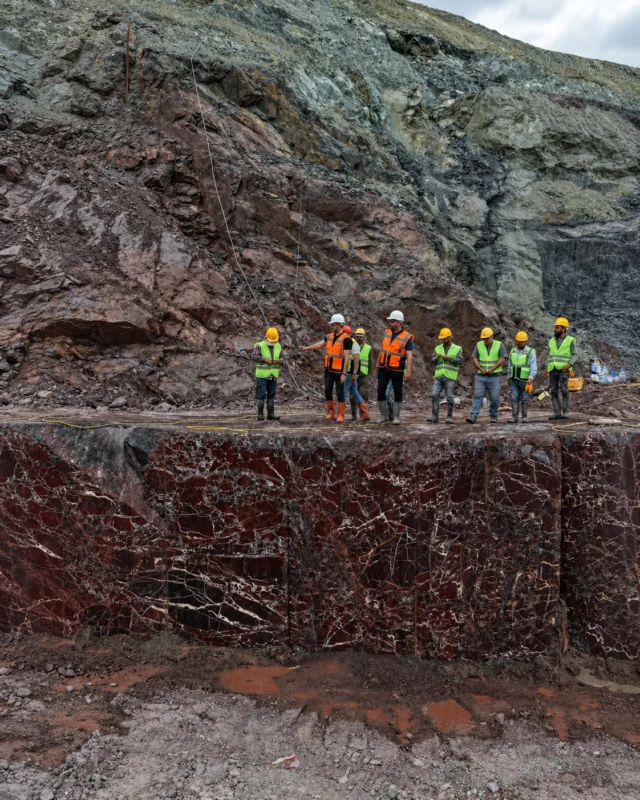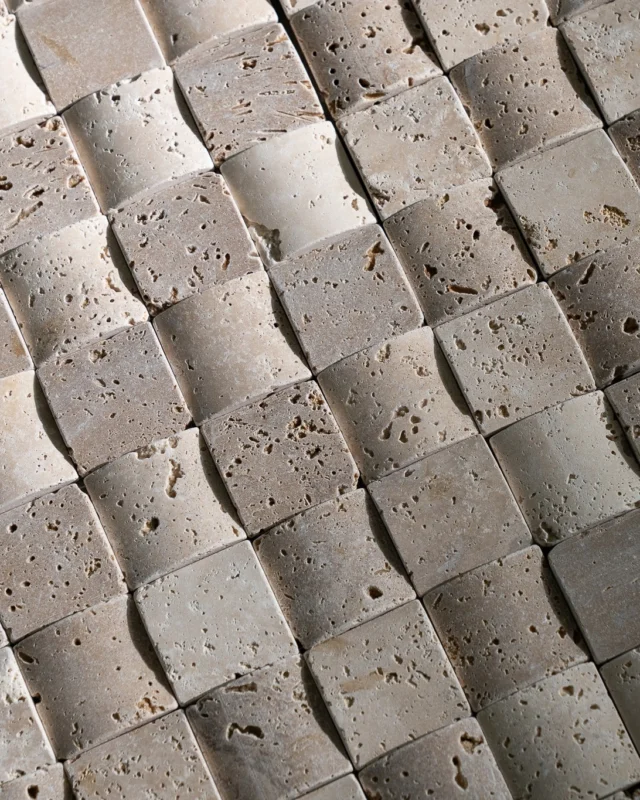



About natural stone
Glossary
Glossary of natural stone terms | Granite | Travertine | Marble | Slate
Introduction: This glossary of terms gives you clear definitions and essential information about marble, travertine, granite, limestone, and slate – the most versatile and durable materials used in construction and interior or exterior design. Discover the benefits of natural stone, including its hardness, maintenance, and durability, as well as its practical applications – from countertops and flooring to cladding and façades.
Download the Natural Stone Glossary (PDF available on the website).
Glossary contents:
Natural stone – versatility in interior and exterior design
Marble – definition, characteristics, and uses
Travertine – everything you need to know
Granite – hardness and applications
Limestone – benefits and applications
Slate – rustic elegance and durability
Natural stone finishes – detailed explanations
How to choose natural stone for your project
Frequently asked questions about natural stone
Discover and download the complete glossary
For more details, talk to a PIATRAONLINE advisor via WhatsApp at +40 744 880 077 or by email at [email protected].
1. Decorative natural stone – versatility in interior and exterior design
Decorative natural stone is an extremely versatile, refined material sourced directly from nature. Valued for its unique texture, exceptional durability, and timeless look. Frequently used in interior and exterior design: accent walls, plinths, exterior façades. Ideal for gardens, fences, living room walls, exterior house cladding.
Benefits of decorative stone
Natural, unique look – every piece has a unique pattern, ideal for wall cladding, flooring, and façades.
Durability and strength – resistant to wear, weather, and the passage of time.
Design versatility – suited to classic, modern, or rustic styles (fences, window sills, façades, decorative walls).
Texture and color – a wide range, from matte finishes to polished surfaces.
Applications of decorative natural stone
Interior design (accent walls, flooring, living rooms, bathrooms, hallways).
Exterior cladding (façades, terraces, gardens).
Natural stone flooring (heavy traffic, indoor/outdoor).
Countertops, window sills, and decorative accents.
How do you choose the right decorative stone?
Consider the project’s style (natural textures – rustic; combined finishes – modern).
The intended application (walls – texture and depth; flooring – durable, easy to maintain).
Color and finish (neutral tones – versatility; bold colors – accent).
Maintenance guide
Periodic sealing. Cleaning with dedicated solutions. Long-term durability – with proper maintenance, it lasts for decades.
2. Marble – elegance in interior and exterior design
Natural marble is one of the most valued natural stones thanks to its elegant look and unique texture. Available in a wide range of colors and finishes, ideal for cladding, countertops, floors, and decorative walls.
Benefits of marble
Luxurious look and timeless elegance (unique natural veining).
Durability and strength.
Versatility (decorative accents, steps, window sills, cladding, kitchen countertops).
A wide range of colors and textures (from white marble to black marble).
Easy to maintain (with sealing).
Applications of marble
- Marble countertops. 2. Floors and flooring. 3. Interior and exterior cladding (accent walls, fireplaces). 4. Window sills, steps, and decorative accents.
Maintaining marble
Sealing, cleaning with dedicated solutions, durability with proper maintenance.
3. Travertine – uniqueness in interior and exterior design
Natural travertine is a calcareous natural stone formed by mineral deposits from hot springs. Known for its fine texture and natural shades (cream, beige, gray). The hardest, most durable travertine in the world is Travertino Latte, supplied exclusively by PIATRAONLINE (premium selection, A+ quality, minimal grouting needed, uniform look, outdoor durability).
Benefits of travertine
- Durability and strength (exterior cladding, terraces). 2. Natural, elegant look (gray for modern, warm tones for classic). 3. Versatility (window sills, French pattern, indoor/outdoor). 4. Affordability and ease of processing.
Travertine outdoors
Terraces, façades, walkways.
Travertine indoors
Bathrooms (walls, floors, sinks), kitchens, decorative walls.
Travertine French pattern
A classic, sophisticated pattern used for interior flooring, exterior paving, terraces, walkways, and pool paving.
How do you choose the right travertine?
- The style of the space (gray – modern, warm tones – classic). 2. The type of application (outdoors – treated tiles; indoors – polished finishes). 3. The format (tiles or French pattern).
Maintaining travertine
Sealing, cleaning with dedicated products, crack repair, periodic maintenance.
4. Granite – durability in interior and exterior design
Natural granite is one of the toughest, most valued natural stones. Ideal for cladding, kitchen countertops, window sills, steps, curbs, and cobblestones. Popular varieties: black granite, gray granite, flamed granite.
Benefits of granite
- Exceptional durability (resistant to scratches, stains, temperature, weather). 2. Elegant look (unique veining). 3. Versatility (curbs, cobblestones, cladding, steps, window sills, countertops). 4. Outdoor durability (flamed granite – anti-slip). 5. Easy to maintain.
Applications of granite
- Kitchen countertops. 2. Window sills and frames. 3. Cladding and flooring. 4. Steps and curbs. 5. Cobblestone paving.
Types of granite
Black granite (countertops, accents). Gray granite (steps, floors, cladding). Flamed granite (anti-slip, outdoors). Large granite slabs (spacious areas).
Maintaining granite
Protection (periodic sealing), cleaning with natural stone solutions, longevity.
5. Limestone – elegance and versatility
Limestone is one of the most popular sedimentary stones, valued for its fine texture and neutral shades (white, beige, gray).
Benefits and uses of limestone
- Durability and strength (flooring, exterior cladding, countertops). 2. Fine texture and authentic look. 3. Neutral colors and adaptability (Limestone Vratza, Myra Beige, Limra, Sunny Dream). 4. Versatility (decorative accents, cladding, countertops, window sills, flooring). 5. Hardness 3-4 on the Mohs scale. 6. Easy maintenance (annual sealing with LTP products).
Applications of limestone
- Interior design (flooring, countertops, decorative walls). 2. Exterior cladding (façades, terraces, gardens). 3. Decorative walls and accents. 4. Window sills and countertops.
6. Slate – natural elegance and durability
Slate is a natural stone known for its durability and unique look. Ideal for cladding, roof tiles, custom panels, polygonal slate. Varieties: black slate, roof tiles, flexible slate, translucent slate.
Benefits of slate
- Durability and strength. 2. Natural, elegant look (black slate). 3. Versatility (cladding, flooring, roofing, fireplaces). 4. Sustainability (recyclable material).
Applications of slate
Roofing (slate tiles). Cladding and flooring. Decorative and custom accents (custom panels, polygonal slate).
6.1 SKIN flexible slate
SKIN flexible slate is a revolutionary, thin, easy-to-handle variant. A PIATRAONLINE innovation since 2016 – the first original flexible slate on the Romanian market, a collection that keeps evolving.
Benefits of flexible slate
- Flexibility and ease of installation (thin, curved surfaces). 2. Modern look (translucent slate – backlighting). 3. Strength and durability (moisture, bathrooms).
Popular applications
- Flexible slate outdoors (façades, curved walls). 2. For bathrooms (natural water resistance). 3. Translucent (backlit panels, partition walls).
Maintaining slate
Sealing, cleaning with dedicated products, minimal maintenance.
7. Natural stone finishes
Polished: a glossy surface. Matte: a smooth texture with no shine. Flamed: a rough, anti-slip surface, for outdoor use. Antiqued: a vintage texture.
8. How do you choose the ideal natural stone?
Intended use (countertops, flooring, walls, façades). Hardness (granite – heavy traffic; travertine/limestone – decorative). Budget (travertine/limestone – affordable; marble/granite – premium). Aesthetics.
9. Frequently asked questions
How do you maintain marble? Periodic sealing and cleaning with LTP Waxwash. What’s the hardest material for countertops? Granite (6-7 on the Mohs scale). How can I protect travertine outdoors? Apply a sealant.
Alphabetical glossary of terms
A
ABSORPTION – the process by which molecules of a substance interpenetrate a material; the amount of water a rock absorbs.
STONE ADHESIVE – adhesive designed for cladding natural stone surfaces. Withstands outdoor installation conditions.
MARBLE ADHESIVE – adhesive used for marble cladding.
ALKALINE – having base-like properties. Neutralizes acids.
CORROSIVE AGENT – an aggressive agent that attacks natural stone. Examples: food acids (vinegar, ketchup, red wine, lemon), certain cosmetics, acidic detergents. Especially affects marble and travertine surfaces.
ANISOTROPY – a property by which a material shows different physical parameters depending on the direction measured. All stones are anisotropic, especially sedimentary rocks.
ANTIQUING – a mechanical or chemical process that gives the stone surface an aged look.
SLATE – a metamorphic rock formed from clay and sand. Hardness 6-7 on the Mohs scale. Used in interior and exterior design. Flexible slate variants exist.
B
TRIM/MOLDING – a decorative element that separates surfaces with different textures and colors.
BULLNOSE – a type of countertop edge profile; the final look is fully rounded (convex). Half-rounded = “half bullnose.” When R equals the thickness = “demi-bullnose.”
CHAMFER – a type of countertop edge profile; cut at an angle, typically 45 degrees. On both sides = “double chamfer.”
PREFABRICATED COUNTERTOP – a countertop made (cut and finished) in the factory.
BUSH-HAMMERING – a process that stamps dots or lines onto the stone surface using a special hammer.
BUTTON – a small square or triangular stone tile, used decoratively.
C
LIMESTONE – stone containing calcium carbonate.
CALCITE – a mineral found in travertine and marble.
CALIBRATION – a processing method that produces tiles with a thickness tolerance of +/- 1 mm.
CAPSTONE – the top stone, the upper part of a vertical structure, wall, or arch.
HEAT STORAGE CAPACITY – a stone’s primary ability to store heat, depending on density and mass.
CAPILLARITY – the property of fluids to move through narrow channels; the phenomenon of moisture absorption in porous stone.
FACE BRICK – a decorative material used to clad interior and exterior surfaces without needing plaster.
CATALYST – a substance that speeds up a chemical reaction.
WAX – a substance used in treating natural stone surfaces.
STONE GROUT – grout for the joints between natural stone tiles, resistant to temperature swings.
FILLING (resin filling) – a process of covering holes with resin. Used especially for travertine.
CLEAVAGE – a rock’s ability to split naturally.
COMPOSITE – a material obtained by mixing minerals, with properties different from its individual components.
CONGLOMERATE – a sedimentary rock with grains larger than 2 mm.
CRACK – a visible split at the stone surface that penetrates into the stone.
CROSS CUT – a method of cutting blocks or slabs perpendicular to the natural veining.
D
CHISELED EDGE – a process of chipping the edges of a tile.
DETERGENT – a cleaning solution for natural stone.
LAMINATION – joining 2 or more tiles by adhesive to achieve greater thickness.
DURABILITY – a stone’s ability to retain its original strength properties under environmental factors.
HARDNESS – in mineralogy, refers to a mineral’s position on the Mohs scale; in general use, refers to abrasion resistance.
E
EFFLORESCENCE – a white powdery residue left by salts carried by water to the surface of stone tiles.
EXFOLIATION – the peeling of a surface layer of stone through chemical or physical processes.
F
FELDSPAR – a mineral widely found in igneous, sedimentary, and metamorphic rocks.
FINISH – a surface process applied to stone to achieve the desired aesthetic and/or performance characteristics.
ANTIQUED finish (tumbled) – an aged look, obtained through chemical or physical sandblasting.
ROUGH finish – the result of cutting stone; a raw, unfinished look.
BUSH-HAMMERED finish – obtained through bush-hammering.
CHISELED EDGE finish – by chipping the edges of tiles.
RIVEN finish – through the natural splitting of stone (slate and sandstone).
DUAL finish – two finishes on the surface of the same tile.
FLAMED finish (thermal) – exposing stone to high heat followed by rapid cooling.
POLISHED finish – polished to a shine, allowing superior light reflection.
LEATHER finish – obtained by polishing to a semi-glossy surface.
HONED finish (matte) – low light reflection (a satin look).
BRUSHED finish – the result of brushing.
SATIN finish – between glossy and matte.
SAWN CUT finish – the result of cutting with a saw.
SPLIT-FACE finish – the result of splitting.
VEIN LINE – a rib on the stone surface, a different color from the veining.
FRENCH PATTERN – a repeating pattern made of 4 tile sizes; one set contains 6 tiles.
APRON – an extension added below the countertop, attached by adhesive to hide the space underneath.
G
GRANITE – igneous rock, made up of feldspar, quartz, and dark minerals (mica), very hard (6-7 on the Mohs scale). Recommended for medium to heavy traffic.
I
SEALING – a treatment applied to stone surfaces to protect against water, dust, and stains.
IMPREGNATOR – a sealing solution that penetrates deep into the stone.
MAINTENANCE – the process of caring for natural stone surfaces.
L
SLAB – a piece of stone of variable size, obtained by cutting blocks.
FLAGSTONE – a polygonal stone slab used for paving.
CLEARANCE STOCK – updated inventory offered at reduced prices.
LIMESTONE – a sedimentary rock formed from limestone or dolomite and marine skeletal fragments. Hardness 3-4 on the Mohs scale.
M
MARBLE – a metamorphic rock formed from limestone, dolomite, or serpentinite. Hardness 3-4 on the Mohs scale. Light-colored marble has translucent properties.
MAINTENANCE (scheduled) – scheduled activity for cleaning and fixing minor imperfections.
MORTAR – a construction material made of sand, water, and cement.
MOSAIC – a decorative art technique using small component pieces mounted on a mesh backing.
P
PANEL – a prefabricated panel made of smaller pieces of stone glued together.
STAIN – the effect of certain agents acting on natural stone.
PATINA – a green or brown color that appears on metal through oxidation; a “patinated” look means worn, aged.
PAVING – an area covered with stone blocks for foot or vehicle traffic. The stone is laid on a bed of mortar or sand.
DRY WALL (stone) – a wall built without mortar.
BRUSHING – a mechanical finishing process using a rotary brush.
ARTIFICIAL STONE – a synthetic material made to look like natural stone.
COBBLESTONE – stone thicker than 5 cm, used for paving. Faceted = smooth sides, cut at right angles; natural = produced by splitting, irregular faces.
NATURAL STONE – a generic term for granite, marble, travertine, limestone, sandstone, slate, and more.
GRINDING STONE – an abrasive stone for finishing corners or edges.
DRIP GROOVE – a groove cut under a window sill to stop water from running down the wall.
TILE – a piece of stone no more than 2 cm thick and no more than 60 cm on a side. Higher-grade tiles are calibrated and chamfered.
SKIRTING/BASEBOARD – a stone strip at the bottom of walls, protecting against moisture and impact.
POROSITY – the network of channels within stone that allows liquid or gas to move through it.
COLOUR ENHANCER – a solution that revives and intensifies the color of natural stone.
R
REINFORCEMENT – a process aimed at strengthening a structure.
RECTIFICATION – correcting tile dimensions by trimming or smoothing.
ROCKERY – a garden feature made of natural stone.
IGNEOUS rocks – formed by the solidification of deep magma or surface lava.
METAMORPHIC rocks – obtained through the recrystallization of other rocks, under the effect of heat and pressure.
SEDIMENTARY rocks – formed in sedimentary basins through external physical and chemical processes.
JOINT – the gap left between tiles to allow for relative movement (expansion) or for a neat finish.
S
SANDBLASTING – a cleaning or finishing process using granular abrasive materials (sand). Chemical sandblasting uses corrosive substances.
SANDSTONE – a sedimentary rock formed by the cementation of sand (quartz and feldspar). Hardness 6-7 on the Mohs scale.
SPLIT FACE – a process of chipping the faces of tiles by striking the edges with a hammer.
SEALANT – a solution for coating the surface of stone and joints.
GRINDING/POLISHING – a processing method to smooth and polish the surface.
STRIPPING – removing a substance from the surface that stops the stone from “breathing” (e.g. wax).
T
TEXTURE – how the stone surface looks, independent of color.
TOLERANCE – the allowed deviation from standard dimensions.
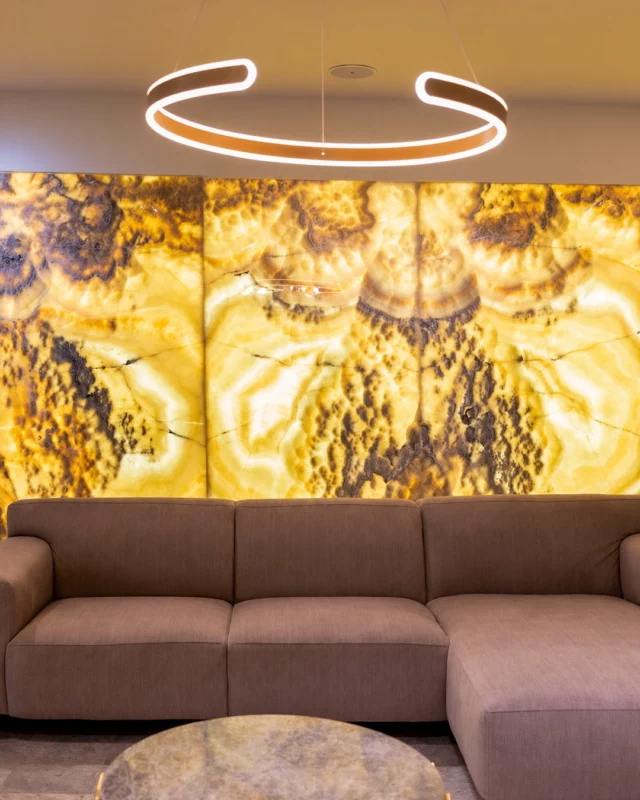
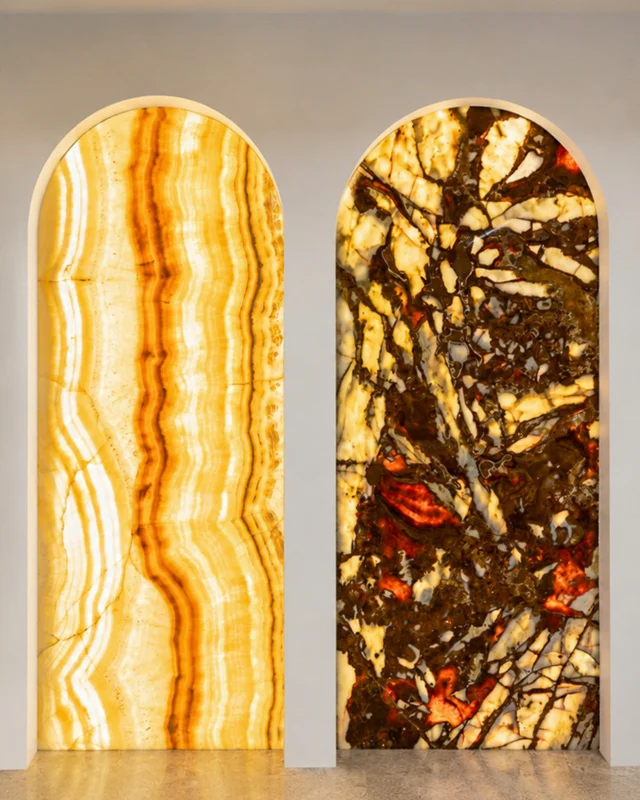
TRANSLUCENCY – a stone’s ability to let light pass through it (marble, onyx, light-colored flexible slate).
TRAVERTINE – a sedimentary rock formed from limestone. Hardness 3-4 on the Mohs scale.
V
VEINING – the branching pattern of ribs on the stone surface.
VEIN CUT – a method of cutting blocks or slabs in line with the natural veining.