


About natural stone
Introduction
Guide: Everything about natural stone from A to Z – types of natural stone, uses, and professional maintenance solutions
Natural stone is one of the most durable, aesthetic, and versatile materials used throughout history. From the ancient temples of Egypt and Greece to contemporary architecture projects, natural stone continues to be valued for its elegance and functionality. Why natural stone matters: durability, uniqueness, sustainability – an eco-friendly material, 100% recyclable. Did you know…? Travertine was used to build the Colosseum in Rome. Carrara marble has been considered a symbol of luxury since the Renaissance.
2. The Journey of Stone: From Quarry to Project
Natural stone, a material with a history spanning millions of years, goes through a rigorous process before it adds value to your project. From extraction at natural quarries to delivery on site, every stage is carried out with precision and professionalism to guarantee the quality and durability of this unique material.
Quarry extraction – The birth of natural stone
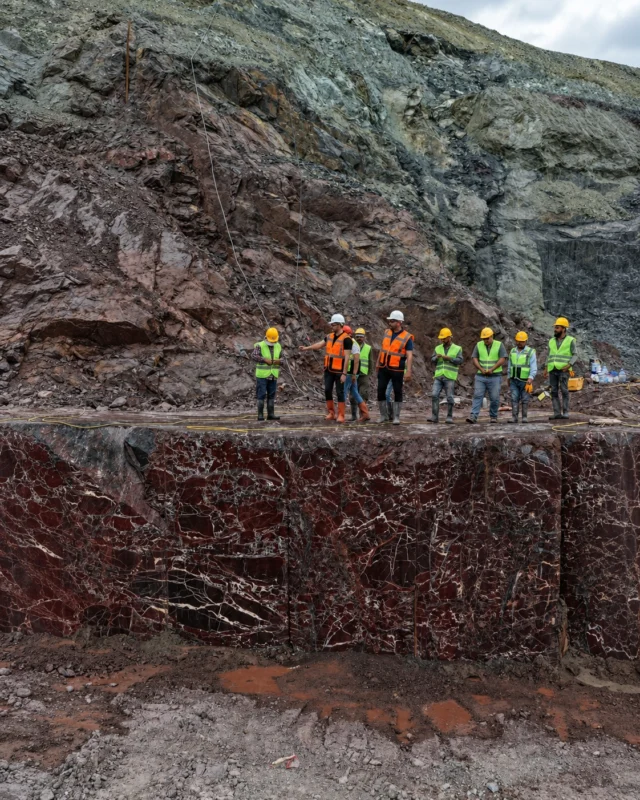
The process begins in natural stone quarries, places where nature has created these impressive resources over millions of years. Extraction is carried out using modern technology, ensuring both efficiency and environmental protection.
Natural stone extraction methods:
Diamond wire saws: Used for precise cuts, minimizing material loss.
Controlled blasting: Applied in large quarries to separate massive blocks.
Hydraulic excavators: For extracting softer materials, such as travertine or limestone.
Quality control at the quarry – every block extracted is analyzed to determine:
Material structure: Texture uniformity and the presence of imperfections.
Color and natural variation: These give every product its uniqueness.
Durability: The physical and chemical properties that determine its use in different projects.
Processing natural stone in factories – turning raw material into art
Natural stone, a versatile and aesthetic material, goes through a complex transformation process in factories, where raw blocks become finished products suited to residential, commercial, and design projects. Advanced technology and the skill of specialists produce high-quality materials, ready to meet even the most demanding requirements.
Essential stages of natural stone processing:
Cutting large blocks of natural stone
These are cut with precision equipment, such as diamond wire saws, to create large slabs or calibrated tiles. For complex details or custom shapes, CNC and WaterJet technology are used, delivering flawless cuts.
Applying finishes
The finish defines the product’s look and function, with each option suited to its final use:
Polished: Glossy surfaces that bring out natural colors and texture. Ideal for elegant interiors.
Honed (matte): A subtle, satin look, suited to modern, minimalist design.
Sandblasted or Antiqued: A rustic texture with anti-slip properties (R10/R11). Recommended especially for outdoor areas and wet indoor areas.
Flamed: A rough finish obtained by exposure to a flame followed by cooling. Ideal for anti-slip traffic areas (R11), generally applied to granite.
Creating finished products
Slabs: Kitchen countertops, steps, and vertical cladding.
Tiles: Floors, walls, façades.
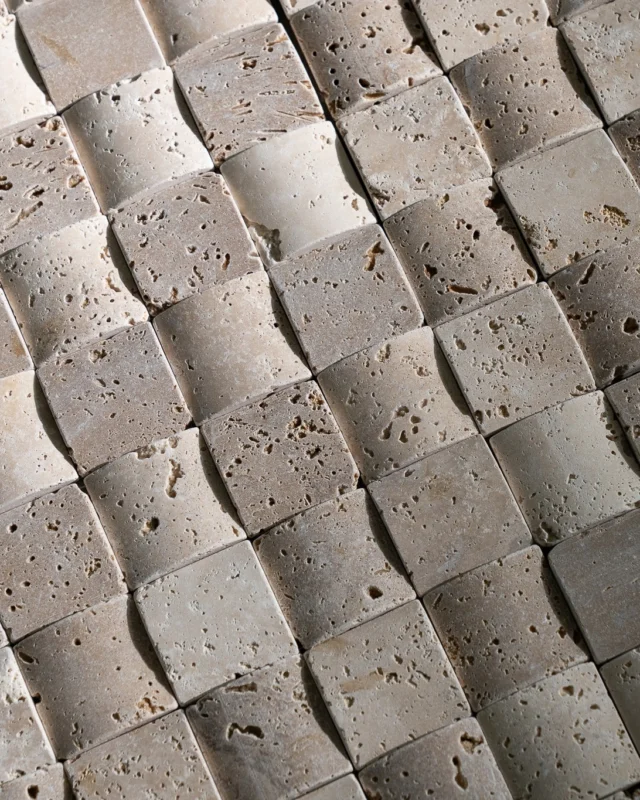
Mosaics: Decorative elements for bathrooms and luxury spaces.
Paving: Tough and durable, for gardens, walkways, and outdoor spaces.
Advantages of modern natural stone processing
Precision: Advanced technology reduces waste and optimizes product quality.
Durability: The finishes applied increase resistance to wear, weather, and heavy traffic.
Aesthetics: Every product retains the unique character of natural stone.
Frequently Asked Questions
How are anti-slip finishes achieved on natural stone?
Finishes such as sandblasting or flaming create rough textures, ideal for outdoor or wet surfaces.
What are the most commonly used natural stone products?
Slabs for countertops and cladding, tiles for floors and façades, mosaics for decoration, and paving for outdoor areas.
What’s the difference between slabs and tiles?
Slabs are large and used for custom projects (countertops, façades), while tiles are standardized for floors and walls.
What technologies are used in natural stone processing?
Diamond wire saws, CNC machines, and WaterJet cutters are essential for precise cuts and custom shapes.
What finish works best for high-traffic areas?
Flamed and sandblasted finishes are ideal thanks to their anti-slip texture and increased durability.
Advantages of high-quality processing
Precision: CNC and WaterJet technology guarantee flawless products, no matter how complex.
Durability: The finishes applied protect the natural stone and extend its lifespan.
Unique aesthetics: Every natural stone tile is unique, with subtle variations that give it an authentic look.
Frequently Asked Questions:
How are anti-slip finishes achieved on natural stone?
Finishes such as sandblasting or flaming are used to create rough surfaces, ideal for outdoor and wet spaces.
What are the most popular natural stone products?
Slabs for countertops and steps, tiles for floors and façades, mosaics for decoration, and paving for gardens are the most commonly used.
What advanced technologies are used in stone processing?
Diamond saws, CNC machines, and WaterJet cutters are among the most widely used for precise cuts and custom patterns.
What’s the difference between slabs and tiles?
Slabs are larger and used for countertops and walls, while tiles are standardized for floors and façades.
What types of stone work best for mosaics?
Travertine and marble are the most commonly used for mosaics thanks to their natural texture and their ability to be cut into small pieces.
3. Storing natural stone – protection and organization
After processing, finished materials are carefully stored in warehouses to prevent damage and to make delivery to projects easier. Natural stone storage procedures:
On specially designed pallets: to maintain stability and prevent tiles from cracking.
Moisture protection: special wrapping is used to prevent water from getting in.
Labeling and sorting: every batch is clearly identified to ensure traceability and efficient management.
Did you know…?
The PIATRAONLINE warehouse, located on Aleea Teișani 137A, Bucharest, spans over 10,000 sqm. Today PIATRAONLINE stores an impressive variety of materials, from travertine and marble to revolutionary sintered stone. The PIATRAONLINE warehouse in Bucharest keeps a permanent stock of over 250,000 sqm, ready to meet the needs of any project, whatever its scale.
Delivery to your project – safety first!
The last step in turning natural stone into an integral part of your project.
Highly secure, precise transport: at PIATRAONLINE, delivering natural stone isn’t just shipping – it’s a carefully calculated and managed experience. From the moment it leaves our warehouse to its arrival on site, every detail is monitored to guarantee the material’s integrity.
Specialized means of transport
Sea containers
Main destination: International exports between continents.
Large stone blocks are shipped in special containers, securely fastened to prevent damage during long transit.
Ideal for high-volume orders (commercial projects, façades, paving).
Trucks and land transport
Main use: Deliveries within Romania and Europe.
40-ton trucks fitted with modern securing systems that keep slabs and tiles stable over long distances.
High availability for fast, efficient deliveries.
3.5-ton vans (straightforward deliveries, or with tail-lift + pallet truck)
Main destination: Precise deliveries for residential projects.
Fast-handling features, perfectly suited to sites with limited access.
Ideal for small and medium-sized projects.
Smart, flexible logistics:
PIATRAONLINE uses a combination of its own modern fleet and partnerships with specialized transport companies. This approach guarantees:
Maximum efficiency: Deliveries optimized for distance and project requirements.
Material safety: Professional packaging that prevents mechanical or environmental damage.
Scalability: From a single residential delivery to massive shipments for property developers.
Why does transport matter?
Improper delivery can seriously affect the quality of natural stone, and material integrity is essential to your project’s success. That’s why every stage of logistics is designed to prevent risk, from vibration and moisture to physical impact.
Frequently Asked Questions:
How is natural stone packaged for transport?
Natural stone is packaged on wooden pallets, with foam padding and stretch wrap to minimize the risk of damage.
What’s the estimated delivery time within Romania?
For orders within Romania, delivery takes between 2 and 5 business days, depending on distance and order type.
Can you deliver to hard-to-reach areas?
Yes, we use 3.5-ton vans fitted with hydraulic lifts, ideal for residential or hard-to-reach areas.
Can I order a small volume of stone for a personal project?
Absolutely. PIATRAONLINE offers custom deliveries, whatever the order size.
How are international shipments handled?
International shipments are made using sea containers and land transport, all managed through partnerships with specialized logistics companies.
What guarantees exist for material integrity?
Every order is inspected before shipping, and packaging is done with high-quality materials to guarantee safety.
Did you know…?
Natural stone blocks can weigh between 5 and 20 tons. They require special equipment for transport and handling.
Every mosaic tile is glued by hand onto a mesh backing. This painstaking process ensures the final precision and look of the product.
The extraction process can take anywhere from a few weeks to a few months. It all depends on the size of the quarry and the specifications required.
If you’d like to discover more about our products or find out how we can add value to your project
Visit our full natural stone section on PIATRAONLINE, and request a free sample to see the quality of our materials for yourself, at home!
Keep your natural stone in the best possible condition!
Contact the PIATRAONLINE team at +40 219 907 (WhatsApp: +40 744 880 077) for any additional information!
3. Types of natural stone – formation, advantages, and uses
Natural beauty meets modern performance. Discover the materials that bring your spaces to life.
| Material type | How it forms | Advantages | Uses |
|---|---|---|---|
| Travertine | Mineral deposits in hot springs. | Warm texture, water-resistant. | Bathrooms, pools, terraces. |
| Marble | Crystallization of limestone under pressure. | Elegance, color variety. | Countertops, floors, façades. |
| Limestone | Compaction of marine sediment. | Minimalist, easy to work. | Façades, interior cladding. |
| Sandstone | Compaction of sand under pressure. | Wear-resistant, natural look. | Walkways, gardens, public spaces. |
| Slate | Metamorphism of clay-based shale. | Strength, unique texture. | Roofing, façades, interior and exterior floor and wall cladding. |
| Granite | Slow cooling of magma. | Extremely tough and durable. | Paving, kitchens, commercial spaces, interior and exterior cladding. |
| Onyx | Mineral deposits in caves. | Translucent, striking look. | Backlit decorative walls, countertops, interior and exterior cladding. |
| Basalt | Rapid solidification of lava. | Extreme durability, understated look. | Paving, steps, industrial spaces. |
| Labradorite | Crystallization in igneous rock. | Color play, durability. | Countertops, interior and exterior cladding. |
| Dolomite | Mineral transformation in marine environments. | Resistant to high temperatures. | Pools, interior and exterior cladding. |
| Sintered stone | Advanced technological process. | Impact-resistant, low maintenance. | Ventilated façades, paving. |
Travertine – timeless elegance and warmth
Formation: Travertine is a sedimentary rock formed from mineral deposits in hot springs.
Advantages: Warm texture, ideal for indoor and outdoor use.
Uses: Terraces, bathrooms, façades, interior and exterior flooring.
Common question: How do I maintain travertine to keep it looking good? Apply a sealant once a year and clean with products designed specifically for travertine.
Marble – the symbol of elegance
Formation: A metamorphic rock formed by the recrystallization of limestone, giving it spectacular natural veining.
Advantages: Elegant look, wear-resistant, available in many finishes.
Uses: Countertops, floors, interior walls, steps.
Common question: Is marble suitable for kitchen countertops? Yes, but it needs sealing to prevent staining.
Limestone – natural minimalism
Formation: A sedimentary rock formed from marine sediment compressed over time.
Advantages: Delicate texture, natural look, ideal for modern designs.
Uses: Façades, window sills, flooring.
Common question: How does limestone perform outdoors? It works well outdoors if treated with sealants and if the right thickness is chosen for its intended use.
Granite – durability
Formation: Slow cooling of magma, which makes it dense and extremely durable.
Advantages: Resistant to high temperatures, abrasion, and scratching.
Uses: Paving, kitchen countertops, commercial spaces.
Common question: Is granite suitable for heavy foot traffic? Yes, it’s one of the most durable materials for high-traffic areas.
Onyx – unique translucent elegance
Formation: Mineral deposits in caves, giving it a spectacular, translucent look.
Advantages: Unique appearance, ideal for LED backlighting.
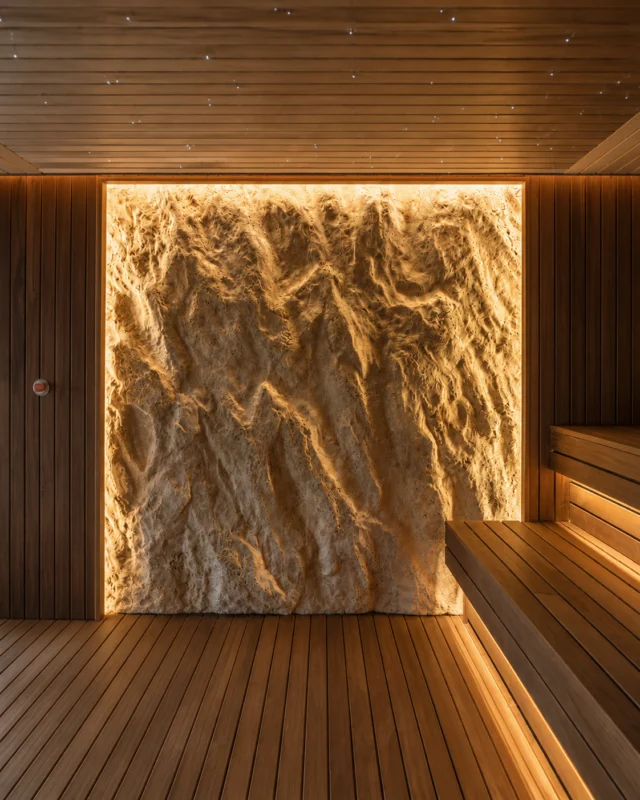
Uses: Decorative panels, countertops, backlit walls.
Common question: How can I use onyx for lighting effects? Use LED panels to bring out onyx’s translucency.
Basalt – simplicity and strength
Formation: Rapid cooling of volcanic lava.
Advantages: Resistant to heavy traffic, natural colors.
Uses: Paving, outdoor steps, decorative walls.
Common question: Is basalt suitable for vehicle traffic? Yes, thanks to its high density.
Standard natural stone thicknesses:
| Thickness | Recommendations | Uses |
|---|---|---|
| 1 cm | Ideal for vertical cladding and interior spaces. | Walls, decorative cladding. |
| 2 cm | Standard for countertops and interior flooring. | Countertops, floors, façades. |
| 3 cm | Extra durable for high-traffic areas. | Commercial kitchens, outdoor paving. |
| 4 cm+ | Suited to heavy paving and ventilated façades. | Driveways, industrial flooring. |
Complete guide to natural stone finishes:
Natural stone is a versatile material used for all kinds of projects thanks to its beauty and durability. That said, the finish you choose can completely change the look and function of a space. Here’s a detailed list of the most popular finishes, how they’re made, which materials they apply to, and their most common uses:
1. Unfinished (raw, sawn cut)
How it’s made: The surface stays raw, straight after cutting, with no further treatment. The natural texture is preserved.
Applicable material: All types of natural stone (marble, granite, travertine, slate).
Uses: Ideal for projects aiming for an authentic, rustic look, such as exterior walls or traditional paving.
2. Flamed
How it’s made: The stone is exposed to intense flame, then rapidly cooled, causing the surface crystals to flake off. The result is a rough, anti-slip texture.
Applicable material: Granite, basalt.
Uses: Recommended for steps, outdoor paving, pool edges, or other surfaces where safety is a priority.
3. Polished
How it’s made: The surface is intensely ground with fine-grit abrasives to achieve a mirror-like shine. It brings out the stone’s natural colors and veining.
Applicable material: Marble, granite, travertine.
Uses: Kitchen countertops, wall cladding, elegant indoor flooring.
4. Honed (matte)
How it’s made: The stone is ground to a smooth texture but without shine. It gives a matte look with a fine touch.
Applicable material: Marble, limestone, travertine.
Uses: Flooring, countertops, and interior cladding, where a more understated look than polished is preferred.
5. Split face
How it’s made: The stone surface is split by hand or machine to create an irregular, three-dimensional texture.
Applicable material: Slate, limestone, travertine.
Uses: Interior and exterior wall decoration, fireplaces, rustic design elements.
6. Antiqued (tumbled)
How it’s made: The stone is tumbled in a drum with abrasives and water to round off corners and edges, giving it a vintage look.
Applicable material: Marble, travertine, limestone.
Uses: Flooring, bathrooms, gardens, or projects that call for an antique feel.
7. Brushed
How it’s made: An abrasive brush is used to give the stone a soft, slightly wavy texture.
Applicable material: Marble, travertine, limestone, basalt, granite.
Uses: Surfaces that need a pleasant-to-the-touch finish, such as interior and exterior cladding.
8. Leather finish (deep brushed)
How it’s made: A combination of brushing and honing creates a velvety texture with a natural look.
Applicable material: Marble, granite, dolomite, and more.
Uses: Kitchen countertops, decorative interior surfaces.
9. Bush-hammered
How it’s made: The stone surface is struck with a special hammer to achieve a uniform, granular texture.
Applicable material: Granite, limestone, travertine, andesite, and more.
Uses: Outdoor flooring, terraces, pedestrian areas.
10. Sandblasted
How it’s made: Sand is blasted under pressure onto the stone surface, creating a fine, anti-slip texture.
Applicable material: Marble, travertine, granite, limestone.
Uses: Walkways, steps, outdoor surfaces.
11. Waterblasted (Aquastorm)
How it’s made: High-pressure water jets are used to clean and texture the stone surface.
Applicable material: All types of natural stone.
Uses: Outdoor areas that need a uniform, durable texture.
12. Acid finish (acid burn)
How it’s made: The surface is treated with special acids, giving the stone a unique texture and a slightly matte color.
Applicable material: Limestone, travertine, marble.
Uses: Luxury interiors, decorative vertical walls.
13. CNC milled / textured
How it’s made: Using CNC-controlled milling tools, custom patterns are created, giving a unique sculpted look.
Applicable material: Marble, travertine, granite.
Uses: Projects with an emphasis on custom design.
Did you know?
Finishes created using CNC (Computer Numerical Control) machinery represent an innovation in natural stone processing, allowing custom patterns and textures on both tiles and slabs. These advanced techniques make it possible to turn marble, travertine, or granite surfaces into unique works of art, tailored to each project’s specifications. CNC machines use computer-controlled milling heads to carve and engrave the stone surface according to the desired design. This process ensures high precision and repeatability, making it possible to create complex, detailed patterns that would be difficult to achieve by hand.
Applying CNC finishes to tiles (medium and large-format cladding):
For tiles, CNC finishes can add three-dimensional textures or decorative patterns, enhancing the aesthetics and function of surfaces. They’re ideal for wall cladding, flooring, or other interior and exterior decorative elements, giving a distinctive, sophisticated look.
Applying CNC finishes to slabs and half-slabs:
For slabs, CNC technology makes it possible to create custom surfaces for kitchen countertops, tables, or other large surfaces. Patterns can range from subtle textures to elaborate carvings, adding value and uniqueness to every project.
Benefits of CNC finishes:
Customization: The ability to create unique designs tailored to each customer’s specific requirements.
Precision: Computer control ensures the design is executed exactly, with minimal tolerances.
Efficiency: The automated process reduces production time and allows complex patterns to be made quickly.
Renowned brands such as PIATRAONLINE use these advanced technologies to give customers innovative solutions in natural stone processing.
By combining CNC-milled finishes, they open new horizons in interior and exterior design, making it possible to create truly unique, custom spaces.
Frequently asked questions
How do I choose the right finish for my project?
The choice depends on the style you want, the function of the space, and the type of traffic it will see – talk to a specialist for personalized recommendations.
Can any finish be applied to any type of natural stone?
Not all finishes are compatible with every stone. For example, a flamed finish works for granite but not for marble.
How do I maintain natural stone with a special finish?
Every finish needs different care. For example, polished stone needs stain-protection treatment, while antiqued stone may need its finish refreshed periodically.
What kinds of patterns can be created using CNC machinery?
CNC machines can create a wide range of patterns, from simple textures to complex, detailed carvings, depending on the design you want.
What’s the difference between hand-finished and CNC finishes?
CNC finishes offer greater precision and repeatability than hand finishing, making it possible to create more complex, detailed patterns in less time.
Are CNC finishes suitable for outdoor use?
Yes, CNC finishes can be applied to both indoor and outdoor surfaces, depending on the type of stone and the design chosen.
Discover the unlimited possibilities of CNC finishes for your project!
Get in touch today to discuss the custom design you can bring to your space.
How to choose natural stone based on its purpose
A well-informed decision turns any space into a masterpiece. Choosing the right natural stone comes down to purpose, aesthetics, and function. Get inspired by nature becoming art.
Natural stone indoors – elegance and warmth:
Marble: The ultimate in luxury. Recommended for living rooms, bathrooms, or spaces that need a touch of elegance.
Travertine: Gives interior spaces a warm, welcoming look. Ideal for floors, walls, and bathrooms.
Limestone: Perfect for minimalist interiors. A honed or brushed finish adds extra refinement.
Onyx: If you dream of spectacular, glowing accents, onyx is the premium choice for countertops or decorative walls.
Natural stone outdoors – strength and durability:
Granite: The standard choice for paving and steps thanks to its resistance to heavy traffic and weather.
Slate: Its natural texture makes it ideal for façades, terraces, and outdoor walkways.
Sintered stone: The latest innovation, suited to ventilated façades and surfaces exposed to extreme conditions.
Natural stone for wet areas – water resistance and safety:
Travertine: Its anti-slip surface makes travertine the preferred choice for bathrooms, pools, and saunas.
Granite: Ideal for showers and pools thanks to its moisture resistance.
Sintered stone: Natural water resistance ensures durability in wet environments.
Natural stone for façades – flawless look and function:
Marble: A symbol of classic and modern architecture. Adds a note of prestige.
Travertine: Travertine façades give off natural warmth and elegance.
Sintered stone: UV and weather resistance make it the ideal choice for ventilated façades.
Limestone and granite: Modern design and exceptional durability for residential or commercial projects.
Frequently asked questions
What’s the best stone for a modern bathroom?
Marble is perfect for an elegant look, while travertine offers a natural texture that’s ideal for showers.
What type of natural stone is recommended for outdoor use?
Granite and slate are ideal thanks to their resistance to traffic and weather.
What material suits a ventilated façade?
Sintered stone is the best solution for ventilated façades thanks to its durability and light weight.
How do I choose stone for a pool?
Travertine is ideal for pool edges thanks to its anti-slip texture and light colors, which don’t overheat in the sun.
Is onyx suitable for kitchen use?
Onyx can be used for spectacular countertops, but it needs regular maintenance to avoid staining.
What thickness is right for outdoor paving?
For outdoor paving, a minimum thickness of 3 cm is recommended for resistance to heavy traffic.
What should you keep in mind?
Traffic: High-traffic areas need durable materials such as granite or sintered stone.
Weather conditions: In areas with major temperature swings, granite and slate are the most durable.
Design: Marble, travertine, and onyx offer a wide range of patterns and colors to suit any architectural style.
Choosing natural stone by thickness
| Thickness | Recommendations | Uses |
|---|---|---|
| 1 cm | Ideal for vertical cladding and interior spaces. | Walls, decorative cladding. |
| 2 cm | Standard for countertops and interior flooring. | Countertops, floors, façades. |
| 3 cm | Extra durable for high-traffic areas. | Commercial kitchens, outdoor paving. |
| 4 cm+ | Suited to heavy paving and ventilated façades. | Driveways, industrial flooring. |
Choose the ideal material for your project and request a sample to discover PIATRAONLINE quality!
5. Complete guide to natural stone installation types, from A to Z
Discover the complete guide to natural stone installation types – adhesive, screed, sand, adjustable pedestals, and ventilated systems – ideal solutions for indoor and outdoor installation. Natural stone is a versatile, durable material, but to get all its benefits, it’s essential to choose the right installation method. Here we cover everything you need to understand the installation types, steps, and tools required for a flawless result, whatever your project.
1. Installing natural stone (travertine, granite, marble, etc.) with adhesive
Recommended for:
Indoors: Installation on walls and floors, including bathrooms and kitchens.
Outdoors: Natural stone façade cladding up to 3 m, terraces, and semi-damp areas.
How do you choose the right adhesive?
For marble or travertine: Use an adhesive designed for light-colored natural stone (e.g. Weber Marmoplus, Weber Portelanat, Weber Setstone).
For granite or slate: Choose an adhesive resistant to weather and temperature swings.
For wet areas: Choose a water-repellent adhesive, ideal for bathrooms or pools.
Steps for adhesive installation: Prepare the surface – clean, smooth, and free of dust. Apply an even layer of adhesive with a notched trowel. Press the stone into place and check it’s level with a spirit level.
Frequently asked questions:
What adhesive should be used for natural stone in a bathroom? A flexible, moisture-resistant adhesive with water-repellent properties is recommended.
How do I apply adhesive correctly on a façade? Use a notched trowel to ensure even adhesion.
Can I use standard adhesive outdoors? No, a special outdoor adhesive is needed, resistant to weather and freeze-thaw cycles.
2. Installing natural stone on screed
Recommended for: Interior and exterior steps (especially those needing a new screed layer); outdoor natural stone paving (e.g. walkways, courtyards); public projects/areas exposed to pedestrian or vehicle traffic; polygonal (river) stone.
Steps for installation on screed: Prepare the base layer by compacting it. Mix the screed with special additives for durability. Lay the stone and adjust the level before it dries. Advantage: high durability for areas exposed to heavy traffic.
Frequently asked questions: How long does the screed take to dry? Usually between 24 and 48 hours, depending on thickness. Can I install sintered stone paving on screed? Yes, sintered stone is fully compatible with this method.
3. Installing natural stone on sand
Recommended for: Cobblestone (cubes); polygonal (river) stone; garden steps (natural stone slabs for gardens).
How does sand-bed installation work? A compacted base layer (soil or gravel). A roughly 5 cm layer of sand, well leveled. The stone is placed directly on the sand and adjusted with a rubber mallet. Advantage: flexibility – tiles can easily be replaced or adjusted.
Frequently asked questions: Does sand-bed paving need sealing? Yes, to prevent erosion or sand shifting, using a stabilizer is recommended.
4. Ventilated installation of natural stone
Recommended for: modern façades (which often combine other materials too); buildings with thermal efficiency needs.
What is ventilated installation? An advanced system that uses a metal frame to support stone panels, creating an air gap between the façade and the building.
Types of ventilated systems: Aluminum frames: ideal for lightweight façades. Steel frames: suited to heavier panels (granite, marble).
Frequently asked questions: What’s the advantage of a ventilated façade? It reduces energy use through thermal insulation and allows water drainage. Can sintered stone be used for ventilated façades? Yes, it’s ideal thanks to its light weight and durability.
5. Installing natural stone on adjustable pedestals
Recommended for: Raised outdoor terraces; pools and outdoor areas needing drainage.
How do you choose a pedestal system? For porcelain tile and 2 cm sintered stone. For natural stone (travertine, granite): minimum 2.5 cm thickness.
Benefits: Optimal water drainage. Fast, easy installation. Can be taken apart and reused.
Frequently asked questions: What thickness should stone be for pedestal installation? Minimum 2 cm for porcelain tile and 2.5 cm for natural stone. Can this system be used in residential areas? Yes, it’s perfect for modern terraces and courtyards.
6. Installing natural stone with BERA BV smart systems:
BERA Gravel Fix Smart: Perfect stabilization for gravel and paving.
BERA Stable Pave: Stabilizer for walkways and courtyards.
BERA Alu Sub-base Terrace System: A system for raised terraces with an aluminum support structure.
Did you know?
Roman roads, among the most durable structures ever built by humankind, were built more than 2,000 years ago, and many are still usable today. The secret to their longevity lies in an ingenious construction technique similar to modern sub-base installation methods. The Romans used a natural “adhesive” – a mix of clay, compacted sand, and crushed stone – that ensured long-term stability and strength. Roman road structure had several layers, each with a specific role:
Statumen (base layer): Large stones, arranged to ensure drainage and foundation stability.
Rudus (intermediate layer): A mix of crushed stone and sand, compacted to form a solid base.
Nucleus (surface layer): A fine mix of clay, stone dust, and water, compacted to create a uniform layer.
Cobblestones or natural stone blocks: These were laid on top of the nucleus and fixed by hand, providing resistance to traffic and weather.
This technique not only guaranteed the durability of the roads, it was also an early example of sustainability. The Romans used local materials, minimizing cost and environmental impact.
What can we learn from the Romans?
Their installation methods still inspire the modern techniques used to pave walkways, terraces, or stone roads today. Sand-bed installation, used for cobblestones, garden steps, or other outdoor applications, follows the same principle: a well-prepared substrate is the key to durability.
The Romans built over 400,000 kilometers of roads, of which about 80,000 kilometers were paved with stone. These roads connected the empire and were essential to trade, military logistics, and economic development. Their manual substrate-compaction method can also be seen as the precursor to the modern plate compactors used to prepare base layers today. This historical example perfectly illustrates the durability of natural stone and the importance of correct installation, both in projects from two millennia ago and in projects today. Choose natural stone and draw inspiration from Roman craftsmanship for projects built to last!
6. Tools, Consumables, and Equipment Needed for Natural Stone
Every stage of processing and installing natural stone requires specialized equipment and consumables to ensure precision, durability, and a flawless final look. This guide covers the most important tools, machinery, and consumables needed for natural stone projects.
Cutting and processing tools for natural stone
Cutting natural stone requires tools specially designed for the hardness and structure of each type of stone.
| Category | Examples | Use |
|---|---|---|
| Diamond blades | Blades for granite, marble, travertine, available in various sizes. | Precise cutting of stone tiles and blocks. |
| Circular saws | Angle grinders, portable stone-cutting machines. | Adjusting edges and details. |
| Saws | Diamond wire saws, water saws. | Cutting large stone blocks. |
| Grinders | Disc grinders for polishing and finishing tiles. | Grinding edges and smoothing surfaces. |
| Diamond core bits | Rotary bits for drilling holes and complex finishes. | Creating holes for fittings or accessories. |
Frequently asked questions
What diamond blade should I use for granite? A fine-grit diamond blade is ideal for precise granite cuts.
Can marble be cut with a regular angle grinder? Yes, but it’s best to use a diamond blade and work with water to reduce heat.
What saw is recommended for travertine? A diamond wire saw is perfect for travertine thanks to its porous texture.
Consumables for installation and maintenance
Used during the installation and maintenance of natural stone, these are essential for durability and appearance.
| Category | Examples | Use |
|---|---|---|
| Adhesives and grout | Epoxy adhesives, polyurethane grout for indoor and outdoor use. | Fixing tiles to horizontal/vertical surfaces. |
| LTP solutions | Cleaning, sealing, and maintenance solutions (e.g. LTP Mattstone, LTP Waxwash). | Stain protection and regular maintenance. |
| Epoxy resins | Resins for repairing cracks or reinforcing fragile stone. | Aesthetic and structural repairs. |
| Sponges and trowels | Special sponges for cleaning, trowels for applying grout. | Even application and effective cleaning. |
Frequently asked questions
What’s the best adhesive for large marble slabs? A high-strength epoxy adhesive is recommended.
How do I seal travertine? Use professional LTP solutions, such as LTP Mattstone, to protect the surface and prevent water absorption.
What cleaning solution should I use for granite? LTP Waxwash is ideal for cleaning granite while keeping its natural shine.
3. Equipment for job sites and warehouses
Professional equipment is needed for handling, transporting, and processing natural stone blocks and slabs.
| Category | Examples | Use |
|---|---|---|
| Suction lifters | Mechanical and hydraulic suction lifters for lifting heavy slabs. | Safely handling slabs. |
| Cranes | Mobile cranes for lifting large blocks. | Transporting blocks in production and storage. |
| Forklifts | Forklifts fitted with special attachments for stone pallets. | Unloading and storing crates/pallets/racks. |
| CNC machinery | Computer-controlled machines for high-precision cutting and engraving. | Creating custom patterns and unique finishes. |
| Polishing machines | Portable polishing machines for on-site finishing. | Fine adjustments and local finishing touches. |
Frequently asked questions
How do I lift heavy stone slabs on site? Use hydraulic suction lifters or mobile cranes for safe handling.
What equipment is ideal for cutting natural stone slabs? Machines designed for cutting natural stone – whether blade-based or waterjet – controlled by a CNC system, are perfect for natural stone (marble, granite, travertine, andesite, etc.), offering high precision and complex modern cuts. These versatile, high-performance systems, available with 3 or 5 interpolated axes, can make fast, highly precise cuts; movement runs on precision guide rails, with a rack-and-pinion drive using helical teeth and centralized lubrication.
Are mechanical suction lifters safe for thin onyx slabs? Yes, but suction lifters specifically designed for fragile materials must be used.
Having the right tools and professional equipment is the key to a successful natural stone project, whether you’re working with marble, granite, travertine, or sintered stone – choosing the right consumables and equipment guarantees flawless results. Discover the full range of tools and consumables available on PIATRAONLINE and turn your projects into lasting masterpieces!
7. Complete guide: storing and handling natural stone safely and properly
Natural stone is a valuable material, and correct storage and handling are essential to preserving its integrity and original appearance. Whether at the central warehouse or on site, every stage requires specific measures to ensure the materials’ safety and durability.
In the warehouse:
Storage on vertical pallets: pallets are designed to support the weight of the stone and prevent warping.
Moisture protection: natural stone must be covered with waterproof wrapping to prevent water absorption or surface damage.
Proper ventilation: warehouses must be well ventilated to prevent moisture build-up and preserve the stone’s quality.
Separating materials: each type of natural stone (travertine, marble, granite, etc.) is stored separately to prevent contamination or accidental scratching.
Safety measures: Clear labeling to identify materials. Regular inspection to detect any cracks or damage. Handling natural stone: technology and precision.
In the warehouse: Specialized equipment: cranes, forklifts, and suction-lifter systems are used to move heavy slabs. Manual handling: for smaller tiles, ergonomic equipment is used to reduce the risk of damage and physical strain. Planned movement: to avoid accidents, handling must follow a clearly established route through the warehouse.
On site: Unloading with equipment: forklifts or cranes are essential for safely unloading materials from vehicles. Scratch protection: tiles are covered with protective materials while being handled. Secure fastening: while being moved, tiles are secured with straps or suction lifters to prevent accidental shifting.
Frequently asked questions:
How should natural stone be stored correctly? Natural stone is stored on vertical pallets, covered with waterproof wrapping, in a well-ventilated space.
What equipment is needed to handle natural stone? For large, heavy slabs, cranes, forklifts, and suction lifters are recommended. Small tiles can be handled manually with ergonomic tools.
How is natural stone transported on site without damaging it? Transporting stone on site involves using flatbed vehicles and securing tiles with straps to prevent movement during transport.
How are cracks avoided when handling natural stone? Cracks can be prevented by using suction lifters for tiles and handling them carefully, avoiding accidental impacts.
What are the most common mistakes in handling natural stone? The most common mistakes include handling without specialized equipment, lack of moisture protection, and overloading pallets with tiles.
Learn how to properly store and handle natural stone:
Maximum safety: Correct handling methods reduce the risk of damage.
Durability: Proper storage extends the lifespan of natural stone.
Efficiency: Using specialized equipment saves time and effort.
Recommendations for professionals: Make sure every handling crew is trained in using the equipment. Label materials to avoid mixing up products. Inspect stock regularly to catch potential defects.
Keep your natural stone in the best possible condition! Contact the PIATRAONLINE team at +40 219 907 (WhatsApp: +40 744 880 077) for any additional information!
8. Complete guide: caring for, sealing, and maintaining natural stone, from A to Z
Caring for natural stone has never been easier! Discover the LTP range for cleaning, sealing, and maintenance, ideal for marble, travertine, and granite.
| Process | Quick-pick product (universal) |
|---|---|
| Cleaning | LTP Grimex, a stripper for removing residue. |
| Sealing | LTP Mattstone H20, a powerful sealant that protects against stains. |
| Maintenance | LTP Waxwash, a neutral detergent for regular cleaning. |
Natural stone is a unique material that adds elegance and value to any space. That said, to keep its beauty and durability, it’s essential to follow the right cleaning, sealing, and maintenance process. Professional products from LTP, a UK-based world leader in natural stone care solutions, make maintenance simple and effective in just 3 essential steps.
Step 1: Cleaning natural stone (marble, travertine, granite, slate, etc.)
Correct cleaning is the first step toward a flawless surface ready for further treatment.
How do you clean natural stone?
Cleaning natural stone after installation: Use a specialized product such as LTP Grimex to remove adhesive, grout, or mortar residue. Apply the solution as directed, let it work, then rinse with clean water.
Regular cleaning of natural stone: Use LTP Stonewash, a gentle detergent that doesn’t damage the surface and keeps the stone’s natural look. Ideal for marble, travertine, granite, and slate.
Intensive cleaning of natural stone for tough stains: For oil, grease, or other persistent stains, we recommend LTP Power Stripper, which cleans effectively without affecting the stone’s texture.
Frequently asked questions about cleaning natural stone:
How do I clean natural stone in the bathroom? Use a dedicated detergent such as LTP Stonewash, which removes limescale build-up without affecting the surface.
How do I remove grease stains from travertine? Apply LTP Power Stripper directly to the stain, let it work for a few minutes, then rinse.
Is it safe to use a universal detergent on natural stone? No, universal products may contain acidic substances that damage the stone. Use specialized solutions such as those in the LTP UK range.
Step 2: Sealing natural stone (marble, travertine, granite, slate, etc.)
Sealing is essential to protect the stone against stains, moisture, and damage caused by external factors.
How do you seal natural stone?
Choose the best sealant for your type of stone: For marble and granite, the best professional sealant is LTP Mattstone, alongside the new LTP Mattstone H20, a water-based, eco-friendly, efficient product covering nearly 15 sqm/L. For travertine and slate, use LTP Colour Intensifier, which protects and enhances the stone’s natural tones.
How do you apply the best natural stone sealant? Clean the surface thoroughly before applying. Apply the sealant with a cloth, brush, or spray, making sure to cover the whole surface evenly. Let it dry according to the manufacturer’s instructions.
How often should it be reapplied? Depending on how much the surface is used, the sealant should be reapplied every 2 years.
Frequently asked questions about sealing
What’s the best sealant for natural stone? LTP Mattstone / LTP Mattstone H20 is ideal for marble, granite, and travertine, offering professional, long-lasting protection.
Do I need to seal outdoor natural stone? Yes, exposure to rain and UV rays can damage the stone. Sealing protects the surface against the weather.
Can I seal natural stone without professional help? Yes, all LTP products are designed for easy use and are suitable for end users too.
Step 3: Maintaining natural stone (marble, travertine, granite, slate, etc.)
Regular maintenance helps keep natural stone looking flawless and extends its lifespan.
How do you maintain natural stone?
Daily cleaning: Use a gentle detergent such as LTP Floorshine, which cleans and protects the surface against dirt.
Periodic reconditioning: To refresh color and shine, use LTP Stone Care Polish.
Extra protection for high-traffic areas: Regularly apply maintenance products such as LTP Waxwash to build up an extra protective film.
Frequently asked questions about maintenance
How do I maintain kitchen stone? Clean daily with LTP Floorshine and periodically apply a polish to prevent grease stains.
My stone has lost its shine. What can I do? Use LTP Stone Care Polish to restore its original shine.
Do I need to use specialized maintenance products? Yes, universal products can damage the stone. Professional solutions, such as the LTP range, are designed specifically to protect and maintain natural stone.
Why choose LTP solutions for natural stone maintenance? Proven effectiveness: LTP products are recognized worldwide for their quality. Adaptability: a complete range of solutions for every type of natural stone. Easy to use: every product is designed for quick, effective application. Eco-friendly: most solutions are water-based and environmentally friendly.
Discover the full range of LTP cleaning, sealing, and maintenance products, available exclusively on PIATRAONLINE.com! Request an LTP sample by courier now!
Frequently asked questions
Here you’ll find answers to the most common questions about natural stone: online orders, custom countertops and pieces in marble, granite, or travertine, delivery across Romania, natural stone showrooms in Bucharest and Timișoara, payment, returns, installation, and maintenance. If you can’t find the answer you’re looking for, PIATRAONLINE advisors are available by phone, WhatsApp, email, or in person at the showroom.
Natural stone showrooms: Bucharest and Timișoara
Where are the PIATRAONLINE showrooms, and what are their hours?
We’re waiting for you at our two PIATRAONLINE natural stone showrooms:
Bucharest: Aleea Teișani, no. 137A, Sector 1 – central showroom and warehouse (piatraonline.com/showroom/bucharest)
Timișoara: Calea Torontalului, no. 69, Vox Technology Park (piatraonline.com/showroom/timisoara)
Both showrooms are open Monday to Friday, 8:00 AM – 6:00 PM.
Do I need to visit the showroom?
We wholeheartedly recommend it. At the showroom, you can see and touch the materials, discover design ideas, and it’s much easier and more efficient to make decisions. Our advisors will assist you and give recommendations tailored to your project – not just about products, but also about maintenance and installation.
If you can’t make it to the showroom, we offer a sample-shipping service and remote consultation (by phone, WhatsApp, or email).
How do I get to the PIATRAONLINE showroom?
The easiest way: search for “PIATRAONLINE” in Waze or Google Maps, and you’ll be guided straight to the showroom you want – Bucharest (Aleea Teișani 137A) or Timișoara (Vox Technology Park, Calea Torontalului 69). The Timișoara showroom is about 15 minutes from the city center.
Can I book a showroom visit?
Yes. You can come by anytime during business hours, no appointment needed. If you’d like a dedicated time slot with an advisor, though, you can book a visit by phone, WhatsApp, or through the website.
How can I get natural stone samples at home?
If you can’t make it to the showroom, we’ll ship you samples of the materials you’re interested in and offer remote consultation. You can request samples through the Samples section on the website (piatraonline.com/infocenter/samples) or directly from your advisor, by phone, WhatsApp, or email.
Specialist advice
How do I get in touch with a PIATRAONLINE advisor?
You can reach us through any of the channels below:
Phone (Call Center): +40 219 907
WhatsApp: +40 744 880 077
In person, at our showrooms in Bucharest and Timișoara
Email: [email protected]
Chat on piatraonline.com
Social media: Facebook, Instagram, TikTok, LinkedIn
Whichever channel you use, you’ll have a single point of contact – your advisor, who stays with you from the start through to delivery of your order. For photos, sketches, and measurements, WhatsApp is the fastest channel.
What’s important when communicating with your PIATRAONLINE advisor?
Give us as much detail about your project as possible, so we can put our team’s full expertise to work for you. It’s best to stay in touch with a single advisor, who will know your project’s details from the start and can quickly find solutions if issues come up.
IMPORTANT! For custom orders/special pieces, all communication (quantities, dimensions, changes, confirmations) must be in writing. This gives both you and us full traceability over the decisions made.
Ordering natural stone
How do I order natural stone online?
For standard/off-the-shelf products, we recommend ordering online at piatraonline.com: create an account, add products to your cart, and pay directly at checkout. Simple and fast. You can also order at the showroom, where a PIATRAONLINE advisor will put together the order together with you.
For custom orders (special pieces) we recommend doing everything in writing (email/WhatsApp), for traceability on both sides.
IMPORTANT! Before sending quantities or dimensions, make sure you’ve checked with your installer and that all dimensions are correct.
How do I check whether a product is in stock?
Availability information is shown on each product’s page on the website (see also the Stock information section: piatraonline.com/info-center/stock-information). For large quantities or projects with a fixed deadline, we recommend confirming availability with your advisor, by phone or WhatsApp.
Can you cut natural stone to my dimensions? (countertops, steps, window sills – CUSTOM orders)
Yes. PIATRAONLINE’s main range remains standard products, but an important specialty is our CUSTOM area, where we cut special pieces to your exact size: kitchen and bathroom countertops, steps, riser panels, window sills, and decorative pieces. We have two categories:
ATELIER – special pieces from our standard ranges (countertops, steps, riser panels, window sills, etc.). You purchase exactly the pieces your project needs, and cutting waste is on PIATRAONLINE. Minimum order: 5 sqm. Production time: 3-4 weeks.
SLAB GALLERY – slabs of exotic materials (marble, granite, onyx). You choose your slab, and we cut it exactly how you want. The entire material from that slab belongs to you, so the minimum order is 1 whole slab (you can’t buy just one piece from a slab). Timeframe: 2-3 weeks for slabs with no cutting/customization, and 4-6 weeks with cutting. Leftover material from the slab can’t be counted as separate pieces, since a lot of things can come up unexpectedly during cutting, and how the slab is cut to produce the pieces the customer wants is at the discretion of the cutting workshop team.
Custom orders are only accepted in writing. Templated pieces carry a 40% surcharge over standard costs, and the timeframe increases by two weeks. Templates must be made of cardboard, so they hold up during transport.
IMPORTANT! Once an order is sent to the workshop, it can no longer be changed. We recommend having the same team that measures also handle the installation.
How do I get a quote/price estimate?
For standard products, prices are shown directly on the website, and you can configure your order in the cart. For projects with custom pieces, large surfaces, or special technical solutions, send your advisor your project details (sketch, dimensions, desired material) via WhatsApp or email; they’ll prepare a personalized quote for you, usually as a pro forma invoice.
What happens if I want to cancel my order?
For standard, in-stock products: the order can be canceled even after payment. The money is refunded through the same method used for the original payment, subject to the legal limits in force; if the amount exceeds that limit, the refund is made by bank transfer.
For products brought into stock specifically for your order, and for special/custom orders: these CANNOT be canceled once placed.
IMPORTANT! The moment of payment is the key moment: by paying, you confirm the order, quantities, and dimensions.
Can I order a cubic meter?
No. Natural stone is ordered based on the product: by square meter, linear meter, piece, bag, etc.
Payment
How do I pay for an order?
You have the following payment options:
Online, by card, directly at checkout on piatraonline.com
A payment link sent by your advisor
Bank transfer (based on the pro forma invoice)
Cash, at the Bucharest showroom (within the legal limits in force)
Card, at the Bucharest showroom
IMPORTANT! Invoices for in-stock products are paid in full before delivery. For made-to-order products, 40% of the value is paid at order time, and the remaining 60% when you’re notified (once we let you know the product is ready), within a maximum of 7 days. The order must be paid in full before shipping.
How do I get an invoice for my order?
The invoice is issued electronically and sent to the email address used when placing the order. If you’d like the invoice made out to a company, send your advisor the company’s full details (name, tax ID, address, bank account) before the invoice is issued.
Delivering natural stone within Romania
What delivery options are there?
Standard delivery – unloading is the customer’s responsibility
Premium delivery (Bucharest and Ilfov County) – mechanized unloading, with a tail-lift and pallet jack, delivered directly onto the property (where access allows)
Courier delivery – only for compact products under 30 kg that aren’t fragile and meet courier company rules (e.g. sealing/maintenance/cleaning products or certain items from the SKIN range)
Pickup from the Bucharest warehouse – the customer arranges their own transport; loading is done ONLY mechanically (exception: small products, which can be loaded by hand – sealing/maintenance/cleaning products, certain SKIN products, small sanitary items)
In the Bucharest-Ilfov area we deliver with our own fleet, and nationally with a partner fleet. All deliveries are carried out by authorized carriers, PIATRAONLINE partners. Full details can be found on the How is it delivered? page (piatraonline.com/info-center/how-delivery-works).
How much does shipping cost?
Shipping cost is calculated automatically in the shopping cart, based on the distance to the delivery address and the weight of the order, before you reach the payment step. This way, you see the final delivery cost before confirming your order.
How long does natural stone delivery take?
Bucharest (in-stock products): 1-2 business days
Nationwide (in-stock products): 2-3 business days
Made-to-order products/special pieces: the timeframe is given when the order is placed (varies by product)
Delivery times apply from the moment payment is recorded in the system; for products that need restocking, delivery times start after the restocking period. Orders are processed Monday to Friday, 8:00 AM – 6:00 PM.
Once we’ve agreed on a delivery date together, we do everything on our end to meet it. There are occasionally exceptional situations beyond our control (crises affecting international shipping, partner carriers’ schedules, extreme weather, difficult access to the address, etc.); in these cases we’ll let you know quickly about any delays.
How do I find out the status of my order?
The person who can give you this information quickly is the PIATRAONLINE advisor you’ve been working with. An efficient approach is to send your order number by email/WhatsApp, so the PIATRAONLINE representative can find it in the system and tell you the status.
What conditions does the delivery location need to meet?
Surface: hard, solid ground (concrete or asphalt), flat, with no steps or thresholds; delivery onto gravel or grass isn’t possible
Truck access: the road must be passable for freight vehicles
Slope: the maximum ground incline must not exceed 10%
Mechanized delivery (Premium): the access path to the property (gate/garden) must be at least 3 meters wide
IMPORTANT! You’re required to tell us about any tonnage or access restrictions when you provide the delivery address. If delivery can’t be completed because you weren’t present or because of undisclosed restrictions, a re-delivery fee applies (usually equal to the original shipping cost).
What are my responsibilities when receiving the goods?
Someone must be present to check the goods and sign the delivery documents. All products must be inspected on unloading, and any damage must be explicitly noted on the delivery note (CMR) and the waybill. Without this note, we can’t take responsibility for any damage.
How long can you hold my order in the warehouse?
Both in-stock products (from the date payment is received) and special pieces (from the moment we tell you they’ve arrived) can be held in the warehouse for a maximum of 5 business days. If pickup doesn’t happen on the agreed date for reasons on your end, a storage fee of 0.5% per day of the delayed order’s total value applies.
Pickup from the Bucharest warehouse (Aleea Teișani 137A) happens Monday to Friday, 8:00 AM – 5:00 PM. You need to arrive with a vehicle suited to the weight of the goods and with securing equipment (straps/belts). The warehouse can refuse to hand over the goods if transport isn’t safe. Loading is done only mechanically, except for small products, which can be loaded by hand.
How are countertops, slabs, and large pieces transported?
Although natural stone is one of the toughest materials around, it becomes fragile when handled and transported – it can be compared to sheets of glass. Natural stone is always transported vertically/on its edge, along the length of the edge, secured against shifting. Transported flat, it will flex and crack from shocks during transit.
Countertops with a sink cutout are even more sensitive; that’s why we recommend cutouts be made on site, before final installation. For safety reasons, you can’t transport countertops in your own car; at least 3 people are needed to handle a countertop, supporting both ends at the same time.
We carry out transport with properly equipped vehicles and specialized drivers, who know the specifics of each material (thickness, veining, composition, dimensions).
Return policy
What do I do if I received an incorrect order?
First, it’s worth knowing that some materials are kept outdoors, so tiles may have traces of dust, may be damp, or may have traces of snow – details that don’t affect the material’s quality. There can also be small shade differences between the samples/tiles in the showroom and the order received: stone is a natural material, and shade variation from batch to batch is completely normal.
If there’s a problem when you receive the goods, take a photo and send it, together with your order details (order/invoice number, name), to [email protected], after also notifying your PIATRAONLINE advisor. You can refuse the order on delivery (in which case return transport to the warehouse is our responsibility); if you accept delivery and change your mind afterward, the return shipping cost is yours to cover. For complaints you can also use [email protected].
What is PIATRAONLINE’s return policy?
The buyer will refuse delivered goods if they don’t match the technical details specified in the order; in this case, the seller takes responsibility for bringing the products into compliance.
An individual buyer has the right to notify the seller in writing that they’re withdrawing from the purchase, with no penalty and no reason required, within 30 calendar days of receiving the product, and can return the product within the same timeframe. The 30-day right of withdrawal applies only to products ordered and purchased online. Orders picked up from the seller’s premises or delivered by the seller’s own vehicles directly to the buyer are not considered distance sales.
The returned product must be in the same condition it was delivered in (in its original packaging, with all accessories and accompanying documents). Return shipping costs are borne by the buyer. Refunds are issued within 14 days of the products being physically received at the ROCK STAR CONSTRUCT SRL warehouse, to the bank account the buyer provides in the Return Form.
The following products cannot be returned: those beyond the 30-day window from receipt; special/custom pieces; products that match the order’s technical specifications; products that were part of a special order; products from a discounted stock clearance; products accepted from the showroom with defects and a corresponding discount; products that were customized or made to the buyer’s specifications; products showing signs of impact, damage, or wear.
Returns must be for the full order; partial returns of a single line item on an invoice aren’t accepted. Products must be returned in their original packaging, undamaged and unused, along with the invoice and/or receipt and related documentation. Failure to meet these conditions will result in the return being refused.
Natural stone products
How do I choose the right stone for my project?
The choice depends on where the stone will be installed (indoors or outdoors), the level of traffic, exposure to moisture, and the look you want. If you’re not sure which material suits you, your PIATRAONLINE advisor will recommend the best option based on your project, budget, and intended use.
Why is every natural stone tile unique?
Natural stone is a material formed in nature, so every tile has its own look. There can be differences in shade, texture, veining, pores, or small natural inclusions compared to display photos or samples. These variations are inherent to natural stone and give it its uniqueness – they’re not considered defects.
What country does my product come from?
PIATRAONLINE imports natural stone from around the world, from Asia to South America. For details about origin, ask your advisor. We always prioritize quality over country of origin.
What’s used to cut natural stone?
Natural stone is cut using an angle grinder fitted with a diamond or silicon-carbide blade, or a water-jet stone-cutting machine. These tools can be found at any hardware store.
Can I exchange one product for another?
No. You need to follow the return procedure (see the return policy above), then place a new order for the products you want.
Do products come with a warranty?
Yes, 2 years, in line with applicable law.
Do natural stone tiles take on room temperature?
Yes, always.
Is natural stone anti-slip?
In winter, you can put sand on stone surfaces, but NOT salt – salt can permanently damage natural stone. It’s a good idea to clean the stone more often, since sand can also wear it down abrasively over time.
How do I maintain natural stone?
We recommend sealing the stone after installation and using detergents made specifically for natural stone (not general-purpose acidic detergents). You’ll find our full range of treatment, cleaning, and maintenance solutions on the website – these ship quickly by courier too. Your advisor can recommend the right solution for the material you’ve chosen.
Installing natural stone
How do you install correctly?
Check the How is it installed? section (piatraonline.com/info-center/how-installation-works) on the website.
Can I install natural stone over underfloor heating?
Yes. Natural stone can be any thickness, but ideally up to a maximum of 2 cm, so heat transfers more quickly. Installation should use flexible adhesives (e.g. Weber Marmo.Plus, 1 bag = 3.5 sqm).
Can electric de-icing be used?
Yes, but only if a flexible adhesive is used when installing the stone (e.g. Weber Marmo.Plus).