Discover the Natural Stone Wonders: Gobleki Tepe – the world’s first astronomical observatory?
Published: General // Published 16.11.2023
Göbekli Tepe is deemed as the cradle of architecture. In here, huge megalithic structures, circle-shaped and made of stone pillars, with more than 5 m in height, and over 15 tones in weight, were laid out in the shape of a letter 'T', for a reason that yet remains to be found. Who built them? And for what purpose? What technology did our ancestors of the Mesolithic era use?
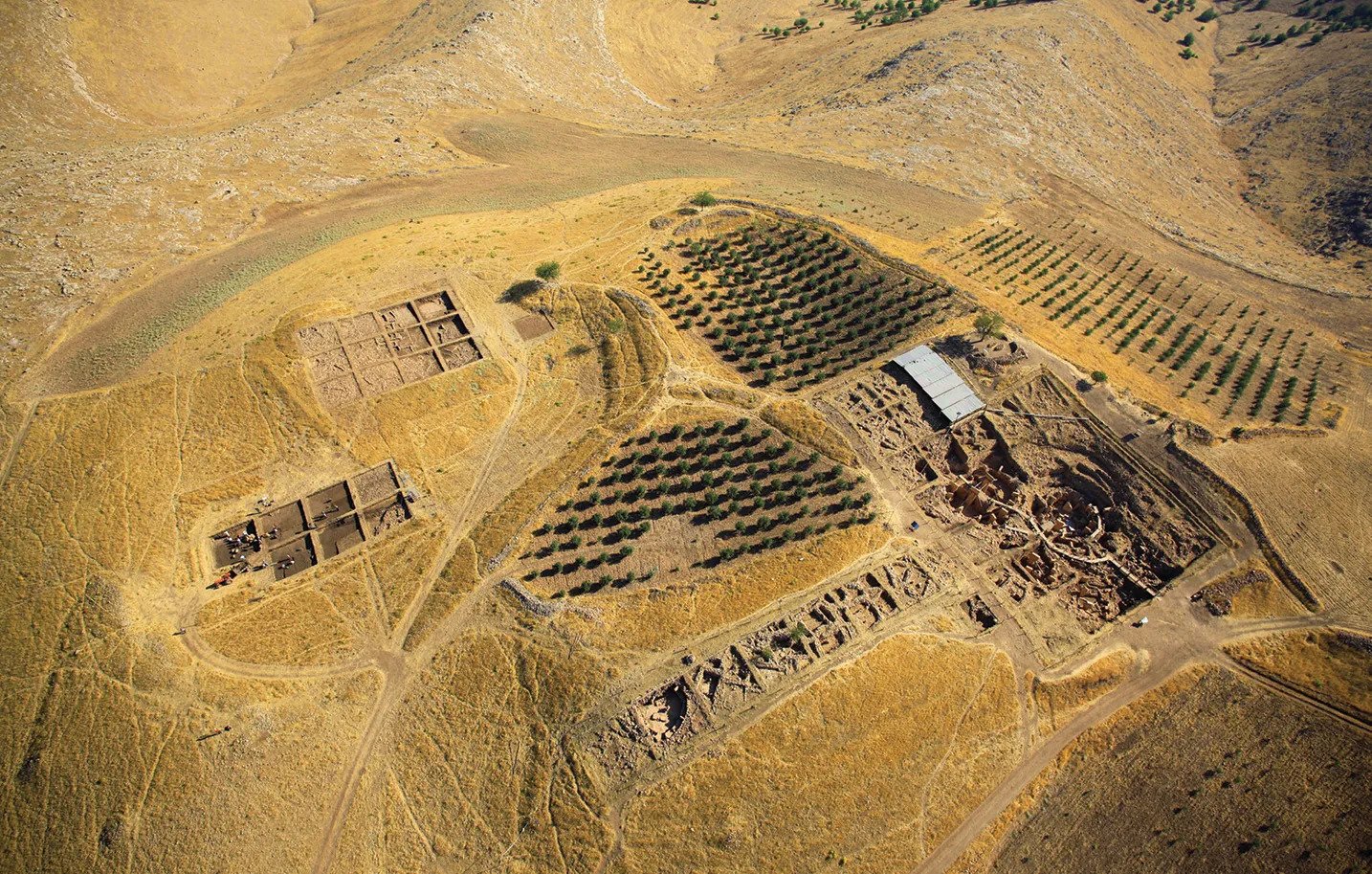
Göbekli Tepe, the Elder
The complex at Göbekli Tepe, located in the Germus Mountains of south-eastern Anatolia, was built 11,500 years ago (about 9000 BC), 6500 years before Stonehenge and 7000 years before the Great Pyramids of Egypt. Its impressive pillars are full of carvings, providing insights into the way of life in Upper Mesopotamia. Add to all this, the discovery of some animal relics and symbols, and that pretty much wraps up everything we know about the complex today. The rest is a sea of controversial conjecture that deepens the mystery. Because, it is impossible to assume that the hunter-gatherers of the time, using flint tools, the only ones available, would have had the technology to make, transport, and climb the stone mammoths.
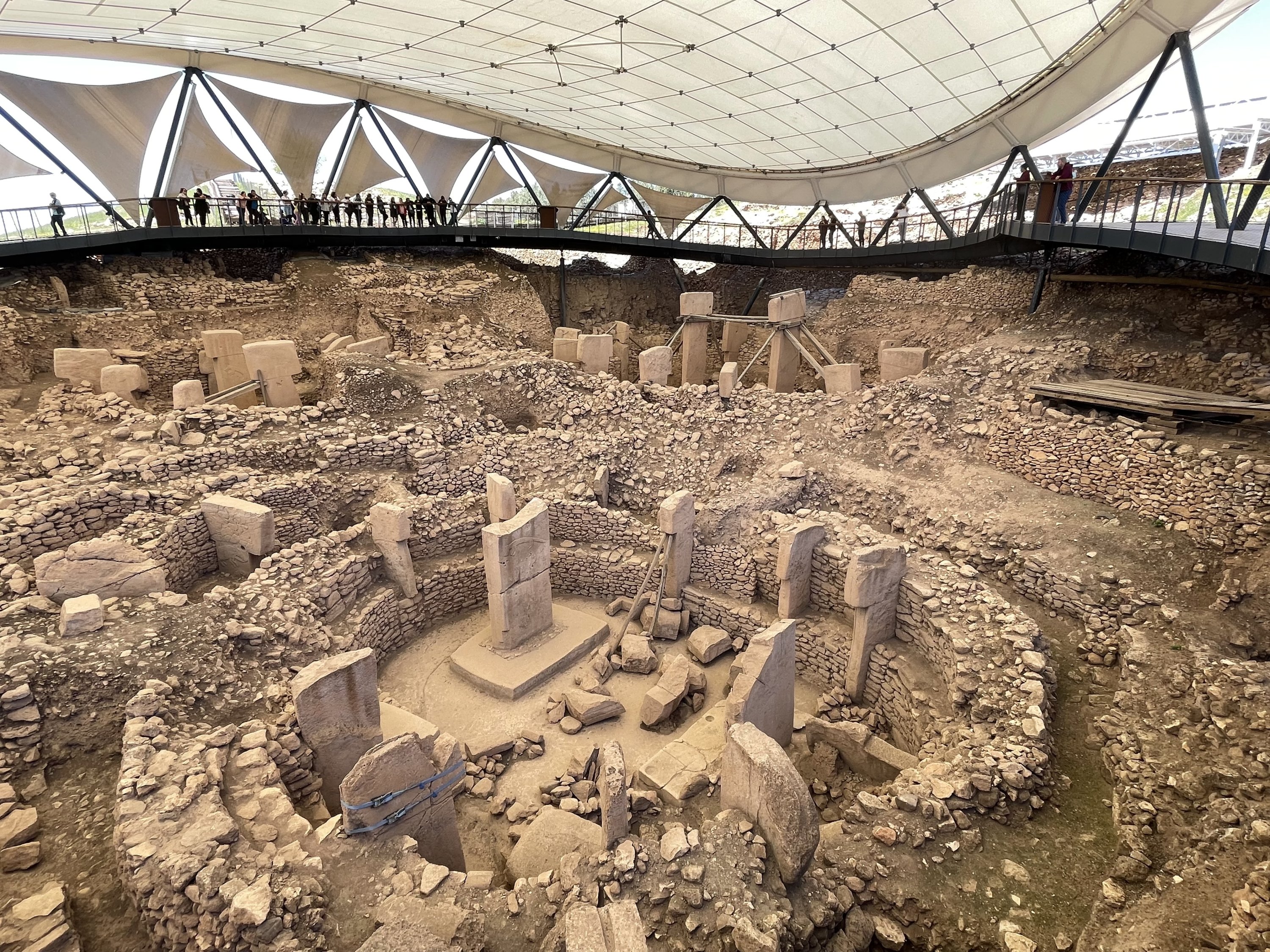
Could Göbekli Tepe serve as a funerary monument?
One theory with enough supporters is that Göbekli Tepe ("Swollen Hill") is a monument of religious significance, a temple where our ancestors from far away (even 200 km) would have gathered to practice their faith or in connection with the funeral rites of the time. Yet, nearby Sumerian monuments with similar meanings could not be preserved for comparison, so the theory remained at the level of hypothesis. Analysis of the stone carvings from the giant pillars revealed images of wild animals, some belonging to currently extinct species, besides stylized human shapes, clothing, and symbols.
Structures have also been identified that do not seem to belong to the temple, but rather look more like dwellings. These are traces of a sophisticated social life for the period in question. Taken together, the remains support the view that Göbekli Tepe was a sanctuary, a place of religious significance where crowds of people from different places came to perform rituals. This is how it came to be considered the first temple on earth. However, is this the only acceptable explanation?
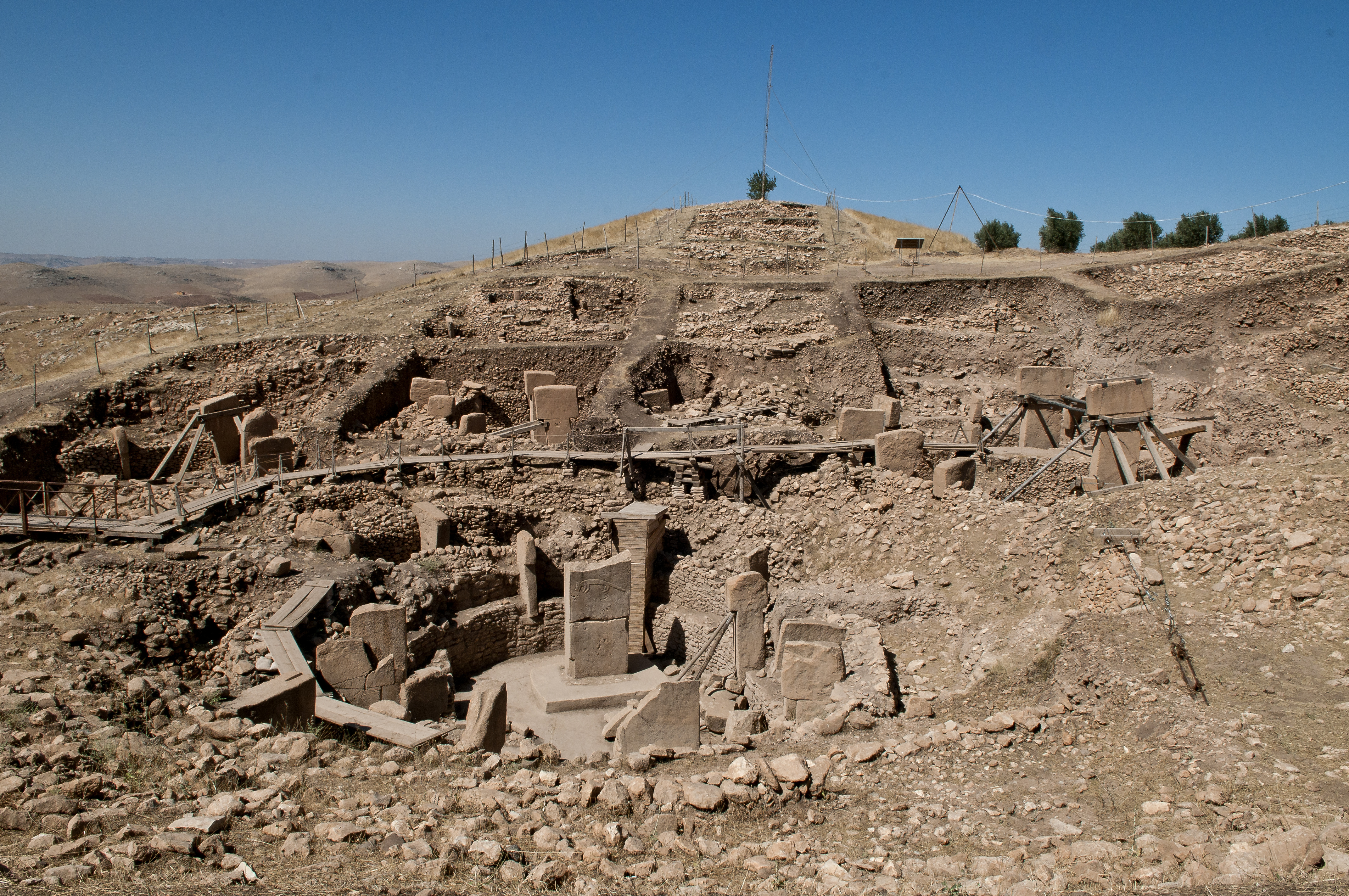
Göbekli Tepe, astronomical observer or victim of fanciful hypotheses?
Several experts speculate that the site is aligned with a constellation. It has been found that the enclosures are oriented towards Deneb, the brightest star of the Great Summer Triangle, formed by Deneb, Vega, and Altair, in the constellation Swan. This theory, being the result of precise calculations and observations, is hard to dispute and deepens the mystery even more. On the other hand, it is known that around 10,950 BC, a comet hit the Earth with catastrophic effects, so the day of impact was considered the worst since the end of the last Ice Age. A pillar at the site appears as a commemorative feature of the event. Not far from Göbekli Tepe (about 500 km) is Mount Ararat - could the animals depicted on the giant pillars be the ones Noah took on his Ark? Was Göbekli Tepe built as a Flood Memorial? Signs and symbols on the pillars refer to the Anunnaki, deities recognized in Babylonian, Sumerian, and Akkadian mythology. All these theories have their supporters, and there are arguments to support them. But...
What else does Göbekli Tepe hide?
The Göbekli Tepe complex is unanimously deemed as the first image of monumental architecture of mankind. It dates from a period of transition from the hunter-gatherer way of life to that brought about by the advent of agriculture. The site was barely investigated, and we do not know what the future holds. The construction techniques imply advanced technology, thus relating to an advanced civilization in Upper Mesopotamia at the end of the last Ice Age, which the artifacts found do not justify. The monolithic pillars were made from the nearby limestone resources, yet their execution indicated higher levels of technology, as well as specialization of activities and hierarchy of society, unknown at that time.
One of the most expressive innovations is the voluntary covering of the 'temple' with earth, the aim being to ensure its persistence over time. At Göbekli Tepe, the pillars are set on a compact stone platform, how could hunters and gatherers proven to have inhabited the area at that time have done this? These pillars are limestone monoliths, between 3 and 6 m high and weighing up to 60 tons. It has been calculated that up to 500 men would have been needed to handle them. Where did they come from and who organized them? And this was at the end of the last Ice Age, at a time when survival was the main challenge. The work would have involved chipping the stone, finishing, transporting, and lifting the pillars into position, and finally filling the whole site with earth.
Who provided the technology for this project? But who did the design and execution plans? Do the 'T' poles represent stylized human forms, as shown by the carved ends (legs, hands)? But are the animals not representations or symbols of constellations? Artifacts discovered nearby (the Urfa man, right next to the site) are very similar to the Moai statues from Easter Island, but also some structures from South America (Peru, Bolivia) or Asia (Indonesia). Extremely curious is also the fact that the later artifacts are rudimentary compared to the older ones, as if the level of civilization and technology had declined over time. Amidst the flood of hypotheses and theories, the complex amazes and fascinates.
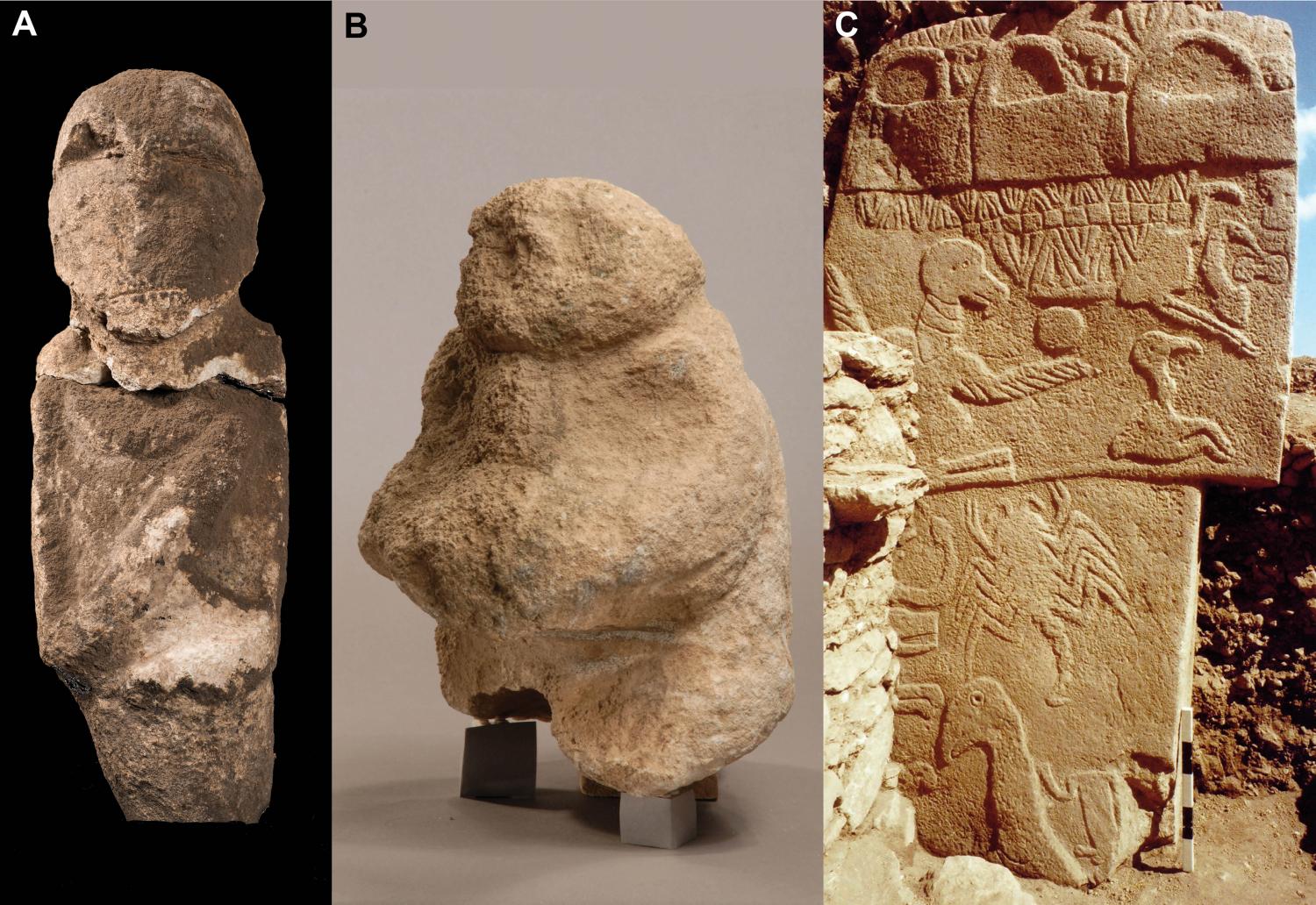
Beyond the tangible time, Göbekli Tepe reveals himself to us stingy. Proud and hiding its secrets under mountains of earth, the first megalithic monument built by man is a constant reminder that our perspective and options remain limited.
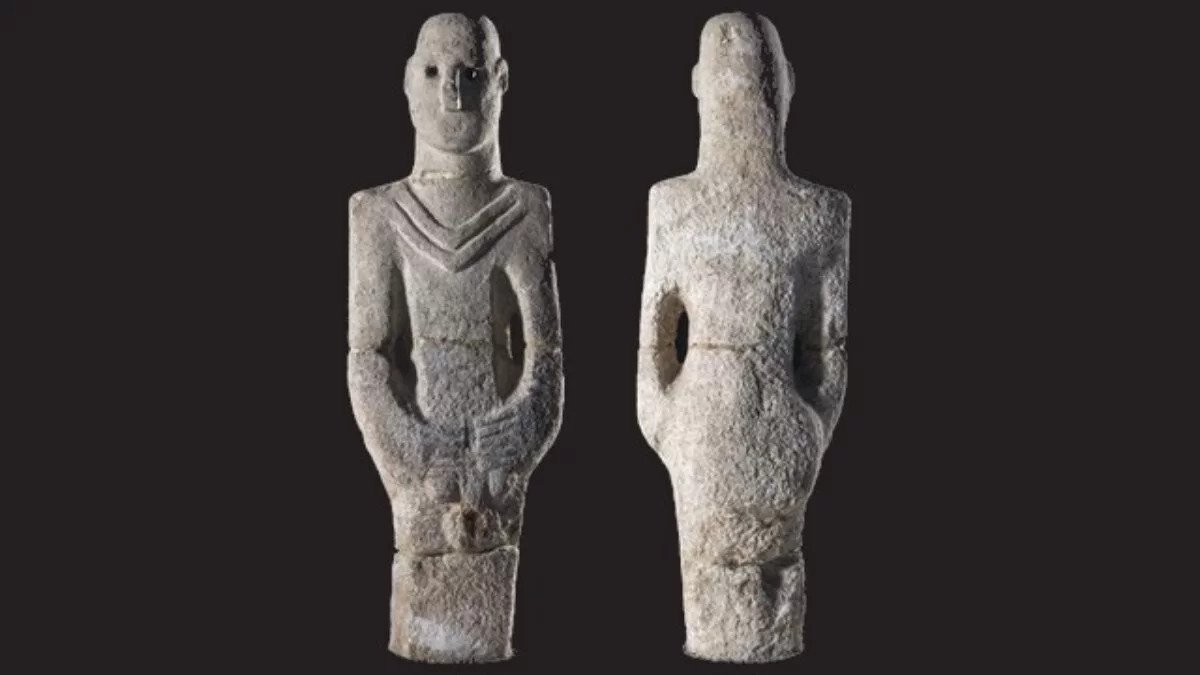
The Moai statues of Easter Island and the silhouette of a man, are depicted to scale. Note the position of the hands of the statues. The same gesture was found on the Man of Urfa near Göbekli Tepe. What did this position symbolize?
For the moment there are no comments from our users.
Write a comment or a review!