Designing a small garden: a demonstration project about value, functionality, and design
Published: General // Published 08.12.2025
Starting point: a different approach to landscape design
Most landscaping projects start with the needs of a beneficiary for whom improving the outdoor space often means improving their quality of life. A well-designed garden becomes a place to relax, a space to connect with nature, and an ideal setting for spending free time outdoors.
.jpg)
The beneficiary and the motivation behind the investment
In the case of this project, however, the starting point was different: let's see what it takes to design a garden. The beneficiary is a company with experience in interior design and project management for hotel properties, accustomed to approaching interventions on spaces with an integrated and professional vision. For them, investments in any project—regardless of scale—are always made in collaboration with an architect, as they consider it essential that the final result be coherent, functional, and sustainable.
.jpg)
The reason they chose to invest in this garden was their desire to demonstrate, through a concrete example, that even a very small outdoor space can become a major asset for a property. The ultimate goal is to increase the value of the property, and their vision for design—interior or exterior—is clear: it must not only be aesthetic, but above all generative, capable of creating value, offering experiences, and transforming the way the space is perceived.
The role of collaborating with a landscape architect
The beneficiary understood from the outset the importance of working with a specialist to achieve these results. And at the end of the work, the effect of the landscaping confirmed this choice: the investment in landscaping improved their quality of life and showed them how much a well-designed space can influence everyday comfort.
.jpg)
The challenge of a space measuring just 36 square meters
Given the theme and the extremely small surface area, as an architect I started by optimizing every centimeter to generate various functions: a space dedicated to tenants, but also a flexible setting that can be rented for advertising, photography, or filming. In this context, aesthetics were essential, but never at the expense of functionality. We thus achieved multiple functions in a space of only 36 square meters—a space that many would consider too small for a significant transformation.
.jpg)
Why conventional solutions are not sufficient
Most often, we encounter yards that have been landscaped independently with simple, repetitive solutions: a barbecue, a patch of lawn, and a few shrubs. Although they may be functional, they often convey the idea that small spaces are not worth investing in or that a garden—no matter how small—requires constant effort, becoming a source of stress.
Why small spaces deserve professional consideration
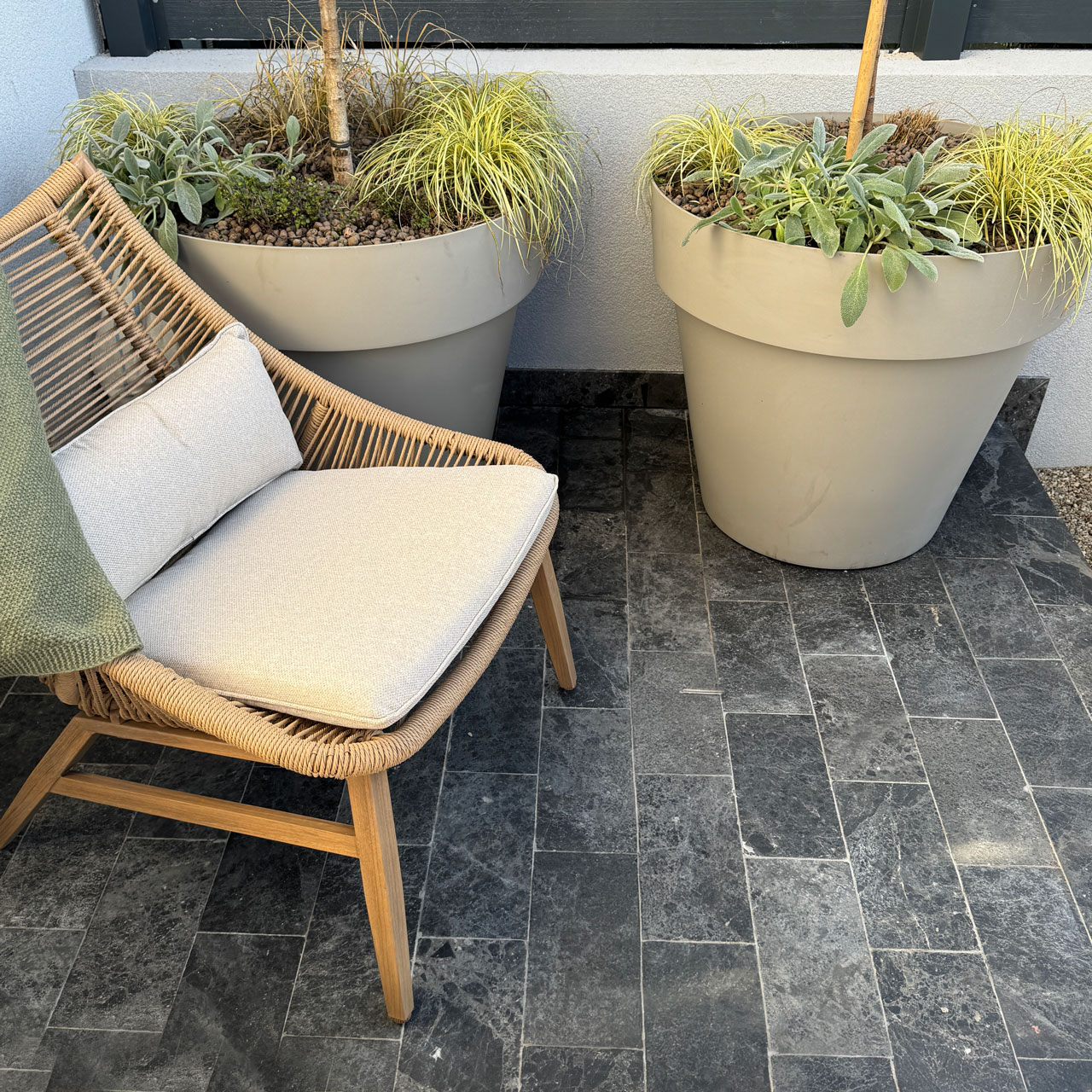
The first feeling I wanted to eliminate from the user experience was stress. We gave up on lawns and used only plants in planters, which require little maintenance and are well adapted to the light and temperature conditions of the space. The materials were carefully chosen to be durable and weather-resistant: natural stone, treated wood for outdoor use, exposed concrete, and decorative gravel.
The architectural solutions that define the garden
Terraces and managing differences in level
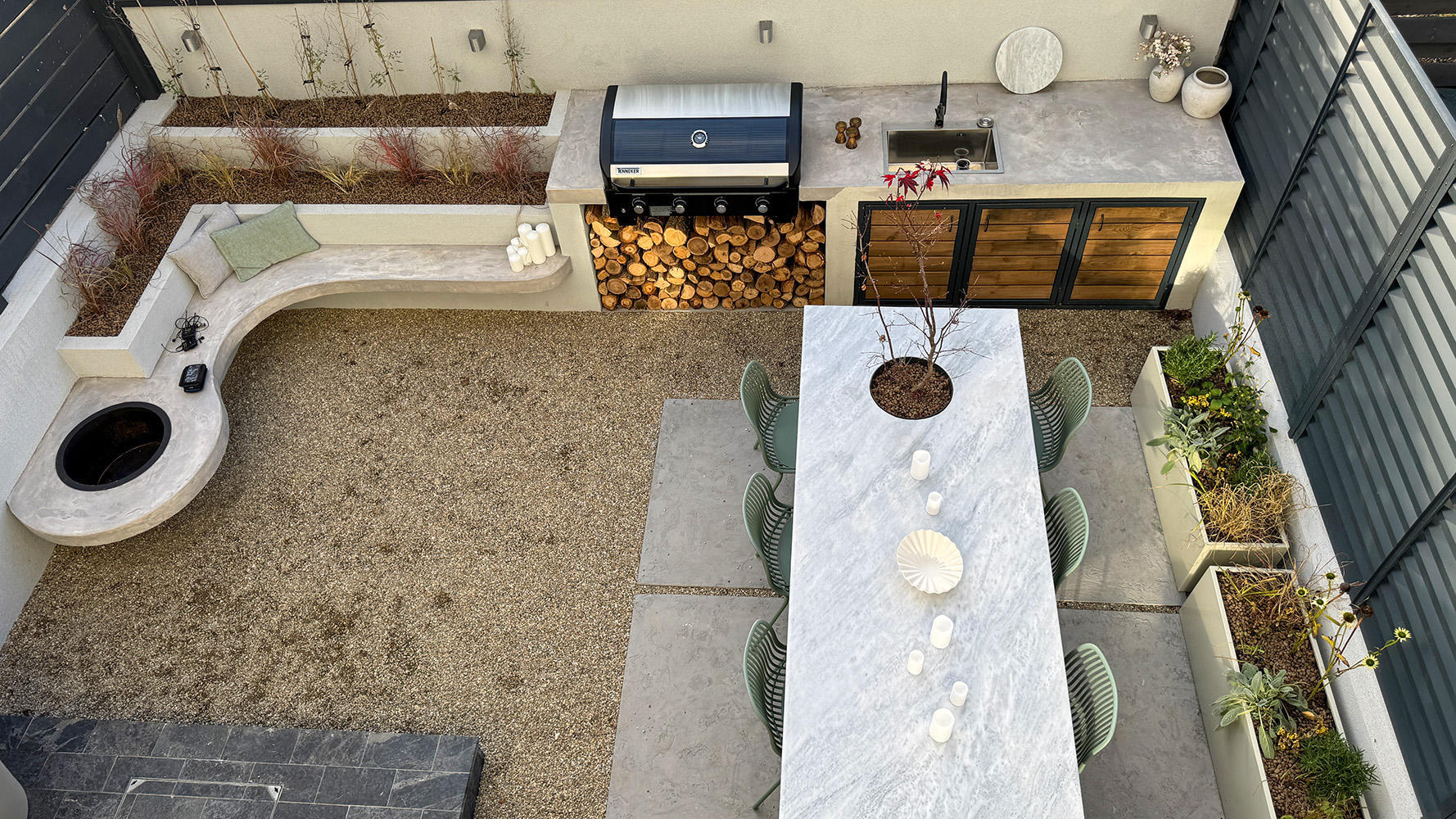
The design starts with resolving the difference in level between the house and the land by means of two distinct terraces, finished with contrasting materials. The height of the first terrace was carefully determined so that the table supported on the concrete slab would be the right height for both chairs and the stool converted into a coffee table.
The concrete bench and the fire pit – central elements
One of the central elements of the project is the concrete bench, arranged in circular arches and ending with a fire pit. Although the project underwent cost optimizations, the bench remained an irreplaceable element. It is supported by two built-in planters, which provide a visual and structural connection to the side fences of the property.
Summer kitchen and functional integration
The summer kitchen was also made of concrete, with a countertop that integrates the grill and sink. Doors were installed under the countertop to conceal the installations, while also creating the only storage space in the garden.
Managing the limitations imposed by neighbors
A more difficult aspect was the fences. In a townhouse-type building, there are neighbors on each side, which limited the possibilities for intervention. However, as the climbing plants grow, this problem will become less noticeable.
Vegetation and material palette
Planters and plants for year-round interest
In addition to built-in planters, arranged in tiers to create depth, we used large metal and plastic planters (for trees) and concrete planters. The plant palette, although not very extensive, is chosen to ensure visual interest throughout the year: bulbs (tulips, daffodils, muscari, allium), perennials (sage, anemones, echinacea), but also species that retain their green structure in winter (Euonymus japonicus). Grasses (pennisetum, carex, miscanthus) will fill the space at the start of the growing season, providing color and dynamism, especially in autumn, when they turn warm tones. The trees—birches, a native species—were chosen for their resistance and the decorative value of their bark. In addition to the built-in planters, arranged in tiers to create depth, we used large metal and plastic planters (for trees) and concrete planters. The plant palette, although not very extensive, is chosen to ensure visual interest throughout the year: bulbs (tulips, daffodils, muscari, allium), perennials (sage, anemones, echinacea), but also species that retain their green structure in winter (Euonymus japonicus). Grasses (pennisetum, carex, miscanthus) will fill the space at the start of the growing season, providing color and dynamism, especially in autumn, when they turn warm tones. The trees—birches, a native species—were chosen for their resistance and the decorative value of their bark.
Functional and atmospheric lighting
Lighting played an important role in ensuring that the garden could also be used in the evening. Light fixtures were installed on the façade and on one of the fences to provide functional lighting without altering the atmosphere. LED strips and ambient lights were integrated under the bench and on the terraces, complemented by decorative candles and lamps. The fire pit also becomes a subtle source of warm light..
Value created through intentional design
Ultimately, this garden represents the meeting point between the beneficiary's professional vision and an architectural approach focused on value and functionality. It proves that a small space can become not only beautiful, but also useful, when every detail is thought out with intention and responsibility.
For the moment there are no comments from our users.
Write a comment or a review!